Showing posts with label tips. Show all posts

Monday, January 21, 2013

Learn the 13 Principles of the Rambam in under 5 minutes

The Problem - we are all ignorant

How many times have you read a Jewish periodical that bemoans how little our students know  about the fundamentals of our faith? These articles will extol the virtues of kiruv programs that teach these ideals to our students in a workshop or two. They quote students who were astounded. "How come I never learned this before?," the students ask.

This problem has been on my mind for quite some time. When I started to teach 3rd grade, I decided to try teaching the basics of our faith on a 9 year old level. I began devoting 5-10 minutes each day using one tefillah as a spring board to explain our beliefs.

Right before I was about to teach Yigdal, which outlines the 13 Principles of Faith of the Rambam, a new article in the HaModia caught my eye. In it, the author challenged Orthodox Jews to name the 13 Principles of the Rambam. The 13 Principles of the Rambam is a list of philosophical truths  that all Orthodox Jews share.  The author questioned how many of Orthodox Jews can name all 13 by heart. If it were so important, he posited, we would know all all of them yet most of us don't.


Finding a solution so we can all learn

I finally had enough. Instead of assigning nefarious motives to  schools and adults for neglecting these very important ideas, it was time to recognize the problem.

Who can memorize 13 of anything? Had the Rambam decided that there were 7 principles of faith, we would have been fine. We can all memorize phone numbers after all.

But 13??? We don't have a fighting chance. Unfortunately for us, the Rambam actually had 13 ideas that we all agree to as Orthodox Jews. It would be hard to cut out 6 just to make it easier to remember.

So, once I realized that the problem is not the lack of desire, but the limits of our memory, I set out to solve the problem.  

Chunking 

A few principles of cognitive psychology came to mind. 

First is the concept of chunking.  It is very hard to remember a list longer than 7. If I divide the long list into smaller groups, it becomes much easier to remember. 

Remembering a list of 13 is almost impossible. However, 3 groups of 4 is doable. Luckily the Rambam's 13 principles has been chunked into 3 broad categories by people far greater than I. Teaching these chunks was step 1 in the universal awareness of the 13 Principles of the Rambam.

Symbols 

Second - who learns with words anymore?

Take a look at the following pictures. How many of them do you recognize? Can you explain what each one means and where you might see it?


We could have probably have  conversations  about each of these simple pictures for quite some time. The reason is that these pictures have meaning to us and are stored differently in our mind than words are. The images arouse both emotional and intellectual responses and trigger huge amounts of information stored in our mind.

The authors of  the book "Classroom Instruction that Works" 2nd edition, devote a a full chapter to the importance of imagery in promoting memory and understanding. "Psychologists believe that information is stored in memory in two ways: as words (linguistic) and as images (nonlinguistic) (p 63). 

Simple pictures make us remember things in a different way than words do. Images not only help us remember concrete things, but also help deepen our understanding of abstract ideas. Just as important, the images help us problem solve and analyze complex issues.

I decided that in addition to chunking, I would make a simple icon, a symbol,  for each of the 13 Principles. This graphic needed to be as simple as possible so it could be  stored in our memory as a single word image and retrieved easily. 

Test yourself

Before I show you the results of my work, try it out for yourself. Here is a list of the 13 Principles of Faith in order. Study them for a 1 1/2 minutes and then see how many you can recall with your eyes closed.

1.  G-d exists 
2.  He is One 
3.  He has no body 
4. He is eternal 
5. All prayers go to Him and not to an intermediary.
6. G-d speaks to man through prophecy. 
7. Moshe was the father of all prophets
8. Moshe gave a True Torah at Har Sinai
9. the Torah will never be changed.
10. G-d knows all
11. G-d rewards the good and punishes the bad
12. Moshiach will come
13. There will be the resurrection of the dead

 So what was your score? ______/13 

Chunking

Now lets see how many you can remember after we chunk the information.

Study each list for thirty seconds, and try to test your memory after you study each section for 30 seconds. Then at the end, test how many you can remember in total.

G-d
1.  G-d exists 
2.  He is One 
3.  He has no body 
4. He is eternal 
5. All prayers go to Him and not to an intermediary.

The Torah of Moshe
6. G-d speaks to man through prophecy. 
7. Moshe was the father of all prophets
8. Moshe gave a True Torah at Har Sinai
9. the Torah will never be changed.

Reward and Punishment
10. G-d knows all 11. G-d rewards the good and punishes the bad
12. Moshiach will come
13. There will be the resurrection of the dead


 So what was your score this time? ______/13 

Symbols

Now lets see how images help us remember. Again study each list for 30 seconds, this time with its accompanying picture. After studying each section, test yourself on that section. At the end, test yourself on all of them.

Section 1: G-d 


1.  G-d exists

2.  He is One

3.  He has no body

4. He is eternal

5. All prayers go to Him and not to an intermediary.

Section 2: The Torah of Moshe


6. G-d speaks to man through prophecy.

7. Moshe was the father of all prophets

8. Moshe gave a True Torah at Har Sinai

9. the Torah will never be changed.


Section 3: Reward and Punishment


10. G-d knows all

11. G-d rewards the good and punishes the bad

12. Moshiach will come

13. There will be the resurrection of the dead


 So what was your score this time? ______/13 


Did the chunking make a difference?

Did you feel like it was easier to learn it with the pictures? 


I tried these graphics out with my students and with adults and the learning was more enjoyable and memorable than a long 40 minute lesson would have been.

Putting it all together - The Final Poster


I didn't want to just make three separate posters, because all thirteen principles are part of our singular belief. So I put all 13 back together into one big poster.  I hope this poster that represents our faith and our beliefs helps everyone  learn what it means to be an Orthodox Jew.

I hope that it can promote Jewish literacy in a pleasant and fun way so that we can all learn that which is  important to us.

Happy Learning!


Thursday, January 10, 2013

Chumash Test Prep

I am very excited about a recent innovation. Before the latest Chumash test, I sent a  letter to the parents to help them help their kids study. I got great feedback, the students felt successful when they came into the test and best yet - their scores went up - showing real learning had taken place!  

************************************************************

ערב שבת,  פרשת שמות
Dear Parents,

This Wednesday, there will be a test on ________________________. Here are some ideas how to study for the test

Test section          How to studyChecklist
Translate phrasesReview the פסוקים.Can I translate the Pesukim without the linear translation sheets?Which phrases do I need to review?
עַל מִי נאמרAsk Who & What questions about the phrases.When there is a pronoun, can I say who that pronoun in referring to?
מִי אָמַר לְמִיWhen someone is talking, pay attention who is talking. Use previous pesukim for helpCan I say who is talking and to whom
What phrase in the פָּסוּקִים says . . .Summarize the phrases in your own wordsCan I summarize the phrases in the פָסוּק  in my own words
שרשיםStudy flash cards.Which ones don’t I know?
רש"י’s questionReview the רש"י sheets.Do I know why Rashi is making a comment? That is Rashi’s question. What is Rashi’s explanation of the דִיבּוּר הַמַתְחִיל?
If you have any questions, please call me. I’m always happy to help!


Mrs. Hochheimer

****************************************************************
I read this note with my child, and my child understands how to study for a  Chumash test.

Signature: ______________________________________________

Wednesday, January 2, 2013

Ani Maamin's - 13 principles of faith illustrated

The first 5 of the 13 principles of faith in graphic icon form . . . to help make them memorable for students who are used to learning visually.

#1 - G-d exists 
#2 - He is One
 #3 - He has no body 
#4 He is eternal 
#5 All prayers go to Him and not to an intermediary.


Wednesday, August 22, 2012

Beginning of the year - binders

School is starting in less than two weeks. When I began teaching third grade two years ago, I envisioned backpacks stuffed with crumbled up paper and homework never done. I found a third grade teacher who explained how to use a binder to teach organization and help students gain independence during homework. It has worked for the last two years, and I am excited to use the system again.

Here is a write up I did the other year.

****************

Goals:
1. Students will gain organizational skills
2. Students will be empowered to complete homework independently
3. Students will complete homework independently

Materials needed:
1. Binder
2. Sheet Protectors
3. Dividers - The teacher should provide these with the appropriate labels already filled out. Every student's red divider is chumash, yellow is dinim, so you can teach the students how to add to their binder and use it with minimal instruction
4. Yoman

Instructions:
Have each student bring a 1 1/2 inch binder and dividers. Put in the yoman, sheet protectors, dividers and folder  at the beginning of the school year. Teach the students how to add papers to the proper section. Send papers home to the parents in the folder in the binder.  Leave 5 -10 minutes each day to add assignments to the binder

Helpful Tips:
1. During class, have the students use their reference guides to answer their questions rather than asking another student or a teacher. Example:Student "What does שמע mean" Teacher: "where can you look that up?" This will help them do their homework without needing parents help.

2. I have a store and a token economy for an incentive - I give $1 for the binder being organized at the end of the day and the homework recorded legibly and in the proper place and $1 the next day for the homework being handed in in the right place, yoman signed and the folder emptied.

Letter to parents


Homework Binders
The Homework Binder is a three ring binder that students will use every day to develop their organizational skills. It contains dividers, folders, and sheet protectors. Hopefully this binder will eliminate lost homework and disorganized backpacks.
Inside the Homework Binder you will find:
Pencil Case:          This pencil case will be used to hold flash cards for current units. It should not be used for regular school supplies.
Sheet Protectors:   These are used to help protect important classroom/school information & homework helpers such as  שרשים list, prefix suffix list, בנינים charts, etc.
Yoman - homework book - with all assignments written
Judaic Homework sheet – The nightly homework assignment
חומש section: Linear translation for the current פרק  as well as any other handouts that may be necessary to complete the homework and study for quizzes.
עברית section – current vocabulary words and grammar rules
General Studies sections  - for general studies homework and all materials necessary to complete the homework.
Folder: Safely transports all paperwork to and from school including graded work, newsletters, etc. Please empty on a regular basis
The binder must be brought home every night and returned to school every day.

Homework

There will be homework most nights of the year. Homework is important as it helps to practice and reinforce what is taught in class. It helps prepare students for success.

·               The homework will be written in the Yoman planner.
·               Some homework will be assigned at the beginning of the week and due on Friday.
·               Any homework sheets will be found in the Homework Binders.
·               Students should be able to do most assignments on their own using the reference guides in the binder. If your child is not able to regularly finish an assignment, please send a note or comment on the Yoman.

Sheet Protectors
The 2012-2013 sheet protectors have been prepared and contain
  1. Daily School Schedule
  2. Classmate List 
  3. One page School Calendar 
  4. A page with the whole hebrew alphabet including the block, script, and rashi fonts
  5. The cantillation marks (trop) that are used to divide pesukim http://www.scribd.com/doc/103654342
  6. A one page color-coded chart to conjugate hebrew verbs http://www.scribd.com/doc/103654348
  7. Reference page with all hebrew prefixes and suffixes 
  8. vocabulary list of all verbs found in parshas Chayei Sarah
  9. A vocabulary list of all nouns found in Chayei  Sarah.
This system works beautifully and can be shared by both the secular and Judaic faculty. 


Wednesday, August 8, 2012

Resource: Prezi: A primer for non-Jewish Teachers in an Orthodox Day School

This is such a great resource - a clear and concise explanation of the practices and belief of Orthodox Jews and how it affects Orthodox Day School practices.

Great for explaining school policies to non-Orthodox teachers and anyone else who might want to become culturally sensitive.

http://prezi.com/y6z1gjiukc10/orthodox-judaism-101/

Monday, July 9, 2012

Teaching Rashi the fun way

Learning to read Rashi script was a highlight for many of my students this year. We took a full body approach to learning the new font. While moving, jumping and acting, my students learned their  letters with a lot of joy.

Here is the teacher's workbook. It has some tips about how to make the more confusing letters become very recognizable. The best idea was the rashi letter simon says. Read on to find out more.

Rashi Workbook Teacher Edition 2012

 Here is the student workbook Rashi Workbook 2012 Happy Learning

Sunday, June 24, 2012

Hebrew resources


I was searching for some hebrew handwriting practice and came across some great hebrew language resources from the place that is most logical - Israel!


http://kaye7.school.org.il/reading.htm - links to Israeli websites that have kriyah resources

http://kaye7.school.org.il/eng/welcome.htm - Resources for Israeli teachers for reading, chumash, etc.


http://www.etze.co.il/ - Lesson plans – Hebrew language vocabulary


http://www.izmargadsys.com/ - Enrichment sheets – on science, yomim tovim, food, in hebrew


Saturday, June 23, 2012

Chumash tip: Portfolios

The students learn a lot of new skills and vocabulary each perek. But what happens at the end of the perek? What do they need to remember and what can they forget? This is a process of learning that students must develop as they mature. New knowledge must be stored in the brain in an  easily accessible place. One way to help students understand the process that their  brain is doing  is to have them replicate this process physically in the classroom. After each perek, we empty the chumash section of the binder. The students discard the worksheets and staple the translation sheets together. They put their saved work in their Judaic Studies portfolio (Moving from short term knowledge to long term storage). It is important that the students understand that they must put the new packet into the portfolio in the proper order. Otherwise, they will not be able to find it quickly and easily when they need it. At the end of the year, all the students  have resources to review what they learned during the year. They  can reflect on how much they have learned and use the sheets to review their material over the summer.

Chumash tip: Create Grading Sheets for after the test

Many chumash test questions are short answer and fill in the blank. I create grading stations in the back of the room for students to self-check their work. The reason I do this is I have found that the students take greater ownership when they are faced with their own mistakes. Some students are prone to skip questions, when they face the disappointment of grading a skipped question, they are less likely to do so in the future.

The grading table is set up with answer keys and pens. Students come to the table with their test paper and that is all. I stand near the table to monitor their grading. It gives them immediate feedback which helps them learn and makes sure they get their tests back right away

Chumash tip: Inner Outer Reviews


Inner/outer reviews are a great way to review a perek of learning.

The desks in my class are set up as a U. Every other student takes his chair puts it on the inside of the U. He sits with his chumash facing his neighbor facing . I set my stopwatch for 2 minutes. The outer student reads the hebrew, the inner student translates. If either of them don't know a word, they put a light pencil dot next to the word. After two minutes, the timer beeps (or quacks in my case). I poll the class about what was the average pasuk completed. I reset my timer and we start from that pasuk with the inner student reading and the outer student translating. After two minutes the inner student gets up and moves to the left. They now have a new partner with whom to read,

If the class has an odd partner, I am the partner. This gives me a chance to test a number of students on both reading and translating

Saturday, June 9, 2012

June 8, 2011 recap

Today was one of those days that teachers dream about. A chance to see all my efforts over the year come full circle.

Here is how it happened.  

We only had three pesukim left to learn in Parshas Vayeitzei. I had the class read the pasukim aloud without teaching them at all. Of course, as we were reading about Yaakov meeting up with the melachim, the class exploded with questions. Was Yaakov in Eretz Yisrael? How could the melachim of Eretz Yisrael come to greet him as Rashi says? Which malachim did he send to Har Seir? Surely not the melachim of Eretz Yisrael. In the beginning of Vayeitzei, he saw the melachim in a dream. Was this in a dream?  The class started flipping forward to Vayishlach to discover more information about the melachim and their journey. 

Finally, we finished the parsha with fifteen minutes to spare before recess. I was in a quandary. The day before, I had quizzed the class on the 30 shorashim in the perek, and they had done review work. I figured we could squeeze in the exciting parsha of behaalosecha in the extra time. Unfortunately, my parsha worksheets were in the office. 

When I told the class my plan they asked if they could learn the next parsha while I was out of the room. I agreed if they kept the noise to a dull roar. I left and got sidetracked at the copier for a few minutes.  When I returned, the students were sitting at the table and at their desks with chavrusas. They excitedly shouted "We finished to Pasuk יא - the eleventh verse!" I asked what that meant. They informed me that they had read and translated seven pasukim and were now asking questions about those pasukim. 

Their eyes shone. They love to learn and know how to learn.

What nachas! 

One of my theories of education is that students need to do the real thing. They don't have Chumash class. They learn Chumash - just like their fathers and mothers do.  As a teacher, my job is to provide them with supports so they can act like the adults. 

A perfect model for this method of education is training wheels on a bicycle. With training wheels, a child learns to ride his bike and the feel of bike riding. Then the training wheels come off, and the parent holds on to the back, providing less support, but still helping the child learn how to ride. Finally, the parent lets go. The child begins to peddle on his own. He may fall a few times, he may wobble at first, but very quickly he rides off on his own. His legs are strong enough, and his sense of balance has been developed so he no longer needs his parents to help him at all. And then a wonderful thing happens, the child begins to bike ride with the parents and they explore new paths together. 

The same thing happens in school. My students know what it means to learn Torah. They see their  parents do it, they see older students do it and they want to do it too. Nebach, they don't have the vocabulary or the maturity  to learn as their parents do. So like the training wheels, they learn with a little help keeping them upright and moving forward.  At first, they got a lot of help with vocabulary and reading. Later, in the year, once they had mastered the basic vocabulary, they only need help with the hard words. Then, the training wheels can come off so they can learn on their own. The final stage is when parent and child, teacher and student begin to learn together as partners in discovering the Torah. The progression must be gradual and deliberate to ensure that the child will get stronger and stronger until they are ready to be independent. 

Today, I saw my theory vindicated. These kids are learning like real masmidim acting like they are sitting in a beis Medrash. They approach learning Torah with a sense of ownership and pride. 

Teaching like this requires a change of mindset.  A teacher can view himself like he is pulling a horse to water, as if he is doing all the hard work in the relationship. But with this attitude, when he is not around, his students won't want to learn. He can view himself like the driver of a car, who determines the roads yet to be travelled. But again, no student wants to go down a path that is determined by others. 

Or, a teacher can view himself like he is that parent, holding on to the back of a bicycle without training wheels. His most fervent hope is that the child will pedal off, leaving the parent waving as he watches his child disappear around the corner with new-found independence. When a teacher teaches with this mindset, the child senses that he is the master of his learning. The child will take ownership for his learning as he is able to set his own course in life and blaze new trails. 


Thursday, May 31, 2012

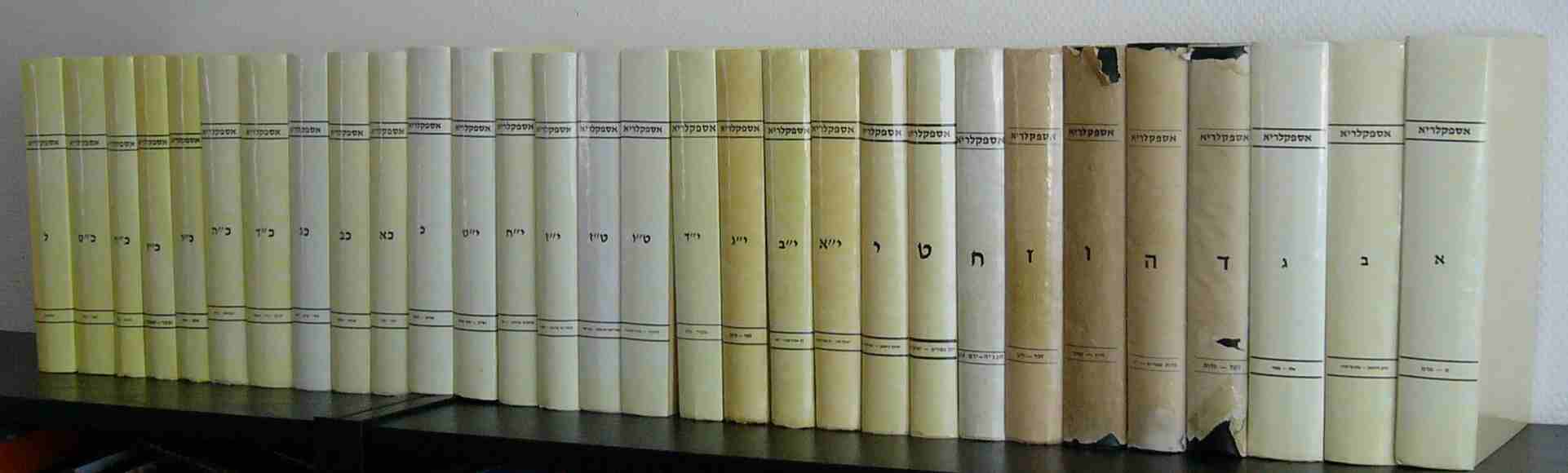
So excited - great online resource http://www.aspaklaria.info/

So when I was in seminary, I got a few volumes of the aspaklaria. I read them for fun- it is an encyclopedia of Jewish topics. I photocopied sources from there so students in high school could do reports  without needing a complete library - I just stumbled on the fact that it is online!   http://www.aspaklaria.info/  I am so excited!


Tuesday, May 1, 2012

DIY: Making my own self checking quizzes

I hate grading papers. If you are a teacher, you probably understand. Grading papers ranks up there with folding laundry and dusting. And papers do need to be graded.

So to help with the tedious work, I have been photocopying the assignments on transparencies, , writing the answers above the blank on  the transparency, and punching holes next to the answer blanks. I also punch a star in the top corner. If the paper is perfect they get the star gets colored. If the answer is correct, I color on the hole.

Less thinking = less painful=less time = papers get returned.

Thursday, April 26, 2012

I bought my own Auto-Nikud software!

So, I was really excited about http://www.nakdan.com/Nakdan.aspx but it was only a trial period and I used it to much in the trial period. I realized that I loved not having to put in nekudos. I like nakdan, From what I could tell in the Israeli reviews was that it works 85% of the time.

Then I found out that Dagesh Pro was on sale for $69.95 and it comes with 10,000 graphics and auto-nikud. The extra features from Dagesh seemed worth the extra $20 that came with the shipping and tax.  I'll let you know how it goes

Wednesday, April 25, 2012

List of Biographies

List of Biographies
Why teach Gedolim?

Rav Nosson Tzvi Finkel
Rav Aharon Kotler
Rav Henoch Leibowitz
Chofetz Chaim
The Rambam
R' Irving Bunim
Rav Avraham Yitzchak Kook
Rav Yosef Sholom Elyashiv
The Ramban
Rav Moshe Feinstein
Baal HaTurim
Rav Ovadiah Yosef
Rav Chaim Pinchas Scheinberg

Sarah Schnerir
Rav Chaim Soloveitchik
Chazon Ish

Make your own Picture Dictionary: online resources working together

Language is learned visually. A mother says "shoe" to a baby as she dresses him. She points to her nose and names it.

I try to provide as many visual cues for all my hebrew vocabulary lists. It takes me so much time to find the right Here is a great resource for this which requires a number of extra steps but will save you so much time having to find all the pictures yourself

Word lists
Enchanted Learning - An English Picture Dictionary

Choose a topic - 
Select all the pictures on the web page & Copy (Ctrl-C)


Make a usable format for the pictures
Open a New Microsoft Word Document and Paste 
Select all text (Ctrl-A)
Remove all hyperlinks (Ctrl-Shift-F9)
Convert table to text (paragraphs)
Prepare text to be converted into a new table: 

Replace line with tabs Find: ^l  Replace: ^t

Select all text (Ctrl-A) 
Convert text to table

Translating text into hebrew

Paste the words from Enchanted Learning into  translate.google.com

Select the translated hebrew text and paste it in a new word document


You will need to edit the text to make sure that all the words were translated correctly.

Prepare the hebrew text to be merged with the pictures
                                                  : Find: ^l^l  Replace with ^p


                                                   Find: ^p^l Replace with ^p


                                                   Find ^l Replace with " * "


Put in Nekudos 

Go to http://www.nakdan.com/Nakdan.aspx (you  will need to buy the program after a trial use)


Select approximately 10 lines from the hebrew document. 
Paste into the  area on the right.
If there is a word that has the wrong nekudos, click on the word. Additional options to choose will appear.
Click נקד הכול.
Copy all the Text with nekudos
Paste it back into the word document and select another 10 lines of text 
Keep adding nekudos until you have completed the whole document.

Get the hebrew text ready to be combine with English

Select All - Ctrl-A
Convert Text to Table (use * as the divider)

Select the two columns of text and copy

Combine hebrew, english, and pictures

Click on  the table with the english words

On the Layout Tab, select Properties

Change the table to right-to-left


Insert two columns to the left of the pictures
Select the columns
Paste your words


You can now use your new dictionary.
You can sort it, or put it in davka writer to do further editing.

It sounds complicated, but once you get the hang of it - it's a breeze.

Monday, April 23, 2012

online resources: Science Curricular materials

Are you looking for some hands-on science curricular materials

Free: check out http://www.google.com/search?tbm=bks&tbo=1&q=Carolina+Biological+Supply+Co&btnG= for older versions of hands on science units that still have what to offer.

Also, you can go to http://www.caboces.org/mst/science-kits for some free science kits that meet NY State standards.

inexpensive: Finally, http://www.espsciencetime.org/ who have science kits which are relatively inexpensive. It might cost you more to print out the science units on your own printer than to order theirs online.


hebrew touch typing: online resource

Help your students learn how to type or you can  Learn hebrew Touch typing level by level

online resource: hebrew vocabulary lists


categories of hebrew vocabulary words- From anatomy to weather

Random Hebrew word arcade games

Click here for larger version

Click here for larger version

test