Showing posts with label hebrew. Show all posts
Showing posts with label hebrew. Show all posts
Wednesday, August 22, 2012
One page binyanim reference in color
I have been working on creating a visual reference for binyanim for the last few years. I was finally able to get it all into one page
Binyanim Letter One Page Color

Sunday, June 24, 2012
Hebrew resources
I was searching for some hebrew handwriting practice and came
across some great hebrew language resources from the place that is most logical
- Israel!
Summer work - http://kaye7.school.org.il/seasons_summer.htm#c2
http://kaye7.school.org.il/reading.htm -
links to Israeli websites that have kriyah resources
http://kaye7.school.org.il/eng/welcome.htm -
Resources for Israeli teachers for reading, chumash, etc.
http://www.kaleykaluli.com/index.php?option=com_content&view=article&catid=21&id=34&Itemid=11 -
stories for each new vowel and letter. printable
http://myfamilythoughts.wordpress.com/activitypages/ - Lesson plans – Look
for the handwriting sheets in particular
Monday, April 30, 2012
May 1 recap
Intro: The students were able to find the words on the second page of the worksheets but weren't able to do the matching. So it was back to the drawing board for another way of teaching it so it sticks.
I asked the students questions from each line. "What word in line 1 tells us that Hashem made the world with his words?" שאמר
This specific reading of the text led to some very interesting questions that showed a deep comprehension.
- Why does it need to repeat the word מלך so many times? (we discussed themes in poetry. I have a son in the class so I know that they are doing a unit on poetry in the afternoon. I was mucho impressed that they had the academic vocabulary to discuss the ideas of literature, themes and poetry using appropriate terms. I made up a impromptu poem with a refrain to illustrate the concept)
- Why does it not mention ה' by name until the second half?
- Why do we need to say these praises each day?
- What is the difference between אמר והיה העולם and עושה בראשית?
- One student even noted that the first half talks about ideas similar to Yigdal and suggested that maybe after a long day involved in secular things we need to remind ourselves of Who ה' is and what we believe before we can praise Hashem.
 Chumash: The room is all set up beautifully for learning Chumash. The shorashim, easy and hard words are up, the sheets from last unit have been emptied into their portfolios. Some words on the felt were not in albhabetical order, so my advanced students volunteered to work alphabetizing them. This was helpful because they don't need to give their full attention to the other work and alphabetizing is a useful skill for looking up things in a glossary. The new pesukim linear translations are in and ready to be learned.
We are going to start with Pesukim 25-27. Translation sheets
1) start off with doing the skill work on the board עבדתיך' עבודתי שלחני ואתנה. I have two white boards so the shorashim went on the left board, the grammar rules went on the right.
The class figured out from the the grammar rules on the board that the pesukim would be a conversation. I like to draw the new shorashim which keeps it more entertaining and teaches the vocabulary more naturally.


2) Ask questions:
- if יעקב thinks it is time to leave, what should the conversation go like?
- When do you think יעקב will want to go and why?
- Will לבן want him stay? How will he convince יעקב to stay.
- call on students to read phrases
- read as a class
- kids ask questions based on the fact that the pesukim differ from what they expected.
- read rashis
- read pesukim as a class
4) Fill in translations - the students paired themselves up. I sat in the back of the room. Some students like the security of working with me. Others prefer to work with friends.
- Level 1 - with teacher/ friend
- Level 2 - with friend, and fill in שרשיםת גוף & זמן
Ivrit: Using a book is much less fun than the free style journaling. Today, the book has a comic of a girl inviting her friend to a party. I don't want to repeat the boredom (for me and I assuming the kids) of reading as a group. We will have groups of 2 read the conversation to each other. Then they will pretend to invite a friend to a party.
In conversation: I reinforced רחוב ________ מספר ______ ש and אני מזמין,מזמינה
בשעה: ________ and להתראות>
Guided practice: Write a sentence inviting a friend to your house. Give the address and time. End the conversation politely: אני מזמינה אותך לביתי - רחוב אלמ מספר 33 בשעה 10. להתראות!
Homework: RT: כה-כז, R: כח-לב
Homework sheet with translating phrases and מי אמר למי
Write a conversation between 2 people, 1 inviting the other.
Skill: Understanding conversation, working as a group, holding a conversation.
Sunday, April 29, 2012
April 30 recap
Intro: Give out these worksheets as a conclusion to ברוך שאמר -
Chumash:
New Unit: Yaakov earning his own sheep by outsmarting Lavan
Pre Perek Prep: Part 1 - without the binder for help
Part 2 - with the binder for help
Differentiation: Enrichment - kids who finish all words hang up cards
Remediation - Kids who don't know Part 1 words look up in binder
Other Remediation - Only do half of the words in Part 2, if they look familiar

Other Prep: The rest of this perek is dependant on understanding what are the goats and sheep referring to.
We will color and label the goats on this worksheet.
Pirkei Avos: We didn't get a chance to do the individual projects for Perek 2 on Friday because of the test. Better late than never! (This bombed - the kids couldn't draw figures by copying from the board. Note to self- draw the people first! or teach them to draw using a grid)
Ivrit: From Mikraa Migdalor, p75-76. A nice unit on greetings and introductions. We will practice some greetings, read the story. If time, we will write a journal entry about ourselves. (This was somewhat of a bore. I hate reading literature from a book. Next time, after putting the words on the board, I'm going to try having the students read the story on their own with a friend and then write up their own introduction of themselves.)
Wednesday, April 25, 2012
Make your own Picture Dictionary: online resources working together
Language is learned visually. A mother says "shoe" to a baby as she dresses him. She points to her nose and names it.


Select all text (Ctrl-A)
Select the translated hebrew text and paste it in a new word document

You will need to edit the text to make sure that all the words were translated correctly.
Select approximately 10 lines from the hebrew document.
Select All - Ctrl-A

Select the two columns of text and copy
Click on the table with the english words
On the Layout Tab, select Properties

Change the table to right-to-left

Insert two columns to the left of the pictures

You can now use your new dictionary.
I try to provide as many visual cues for all my hebrew vocabulary lists. It takes me so much time to find the right Here is a great resource for this which requires a number of extra steps but will save you so much time having to find all the pictures yourself
Word lists
Enchanted Learning - An English Picture Dictionary
Choose a topic -
Select all the pictures on the web page & Copy (Ctrl-C)

Make a usable format for the pictures
Open a New Microsoft Word Document and Paste
Select all text (Ctrl-A)
Remove all hyperlinks (Ctrl-Shift-F9)
Convert table to text (paragraphs)

Prepare text to be converted into a new table:
Replace line with tabs Find: ^l Replace: ^t
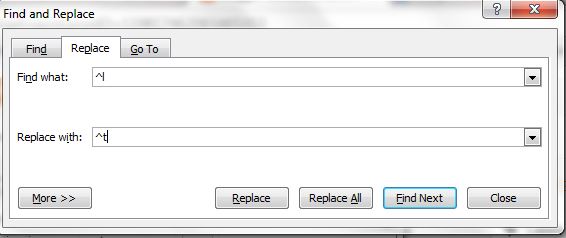
Replace line with tabs Find: ^l Replace: ^t

Select all text (Ctrl-A)
Convert text to table
Translating text into hebrew

Select the translated hebrew text and paste it in a new word document

You will need to edit the text to make sure that all the words were translated correctly.
Prepare the hebrew text to be merged with the pictures
: Find: ^l^l Replace with ^p
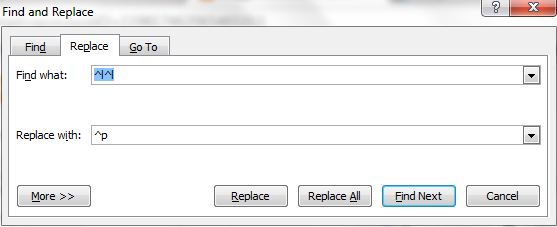

Find: ^p^l Replace with ^p


Find ^l Replace with " * "


Put in Nekudos

Select approximately 10 lines from the hebrew document.
Paste into the area on the right.
If there is a word that has the wrong nekudos, click on the word. Additional options to choose will appear.
Click נקד הכול.
Copy all the Text with nekudos
Paste it back into the word document and select another 10 lines of text
Keep adding nekudos until you have completed the whole document.
Get the hebrew text ready to be combine with English
Select All - Ctrl-A
Convert Text to Table (use * as the divider)

Select the two columns of text and copy
Combine hebrew, english, and pictures
Click on the table with the english words
On the Layout Tab, select Properties

Change the table to right-to-left

Insert two columns to the left of the pictures
Select the columns
Paste your words

You can now use your new dictionary.
You can sort it, or put it in davka writer to do further editing.
It sounds complicated, but once you get the hang of it - it's a breeze.
Monday, April 23, 2012
hebrew touch typing: online resource
Help your students learn how to type or you can Learn hebrew Touch typing level by level
online resource: hebrew vocabulary lists
categories of hebrew vocabulary words- From anatomy to weather
online games for common shorashim: level 3
אבד-lose, בטח-trust, בין-understand, גאל-save, גדל-grow, גור-live, גלה-reveal, דרש-seek, הלל-praise, הרג-kill, זבח-sacrifice, חלל-profane, ירה-shoot, יתר-remain, כבד-heavy, נבא-prophesy, נגע-smite, נוס-flee, נסע-travel, סבב-surround, ספר-tell, עזב-leave, פנה-turn, קבץ-gather, קדש-make holy, רוץ-run, רעה-shepherd, שאר-remain, שבע-satisfy, שוב-return, שכח-forget, שלך-send, שמח-happy, שנא-hate, שפך-pour, שרת-serveonline games for common shorashim level 2
אהב-love, אמן-believe, בוש-embarrass, בכה-cry, בקש-seek, זכר-remember, חזק-strengthen, חטא-sin, חיה-live, יטב-do good, ישע-save, כון-prepare, כסה-cover, כפר-atone, כתב-write, לבש-dress, לחם-fight, לכד-capture, מלך-throne, נגד-tell, נגש-approach, נכה-hit, נצל-save, סור-turn, עבר-pass over, קבר-bury, קרב-bring close, רדף-chase, רום-raise, שאל-ask, שבר-break, שחת-destroy, שכב-lie down, שכן-dwell, שלם-complete, שמר-guard, שפט-judge, שרף-burn
Subscribe to:
Posts (Atom)
 test
test