Showing posts with label ivrit. Show all posts
Showing posts with label ivrit. Show all posts
Wednesday, August 22, 2012
One page binyanim reference in color
I have been working on creating a visual reference for binyanim for the last few years. I was finally able to get it all into one page
Binyanim Letter One Page Color

Sunday, June 24, 2012
Hebrew resources
I was searching for some hebrew handwriting practice and came
across some great hebrew language resources from the place that is most logical
- Israel!
Summer work - http://kaye7.school.org.il/seasons_summer.htm#c2
http://kaye7.school.org.il/reading.htm -
links to Israeli websites that have kriyah resources
http://kaye7.school.org.il/eng/welcome.htm -
Resources for Israeli teachers for reading, chumash, etc.
http://www.kaleykaluli.com/index.php?option=com_content&view=article&catid=21&id=34&Itemid=11 -
stories for each new vowel and letter. printable
http://myfamilythoughts.wordpress.com/activitypages/ - Lesson plans – Look
for the handwriting sheets in particular
Saturday, June 2, 2012
June 1 recap
Today was a great day -
Chumash: how far we have come this year. In the beginning of the year, the students needed me to get them to learn new information. Now they are learning study skills. First, I had the students cover the English in their linear for pesukim כה-ל, read it and underline any words they didn't know. Then we identified the עבר,הווה,עתיד and the שם גוף (pronoun) for all the verbs in pesukim לא-לה. We started to learn the pesukim but quickly got sidetracked by some very interesting discussions of the pesukim and Lavan and whether yaakov and Rochel had spoken lashon hara. Every student participated and were responding to each other about the topic. I can't wait to see this group when they can learn on their own. There will be no holding
them back.
Improve study skills, word attack skills, listening and responding to peers
For parsha, we did the rabbi balsam sheets for naso .
Word Find: http://www.scribd.com/doc/95720126/Naso-Word-Find
Rabbi Balsam for Parshas Naso: http://www.scribd.com/doc/95720128/Naso-Sheets#page=1
We then filled out the chart of which korbanos each nasi brought. I have learned that karbonos are interesting for little kids if you make it concrete. Plus, after yaakov and his sheep, my class knew what עתודים ואילים are. Here is the board example of our chart.
Goal: make a very abstract part of Torah clear, motivation, graphic organizer

And the chart before it was filled in
I then showed the class my parsha cakes from a few years ago. One student went home and made some with his family.

Thursday, May 31, 2012
Thursday, May 31 recap
Here are some of the things we did today:
Tefillah: for the new tefillah, one student was the chazzan. He read each phrase, stopping at the comma or the period, then the class repeated it after him. This method really helps with fluency for each new tefilla.
Improve fluency, and have students assume responsibility for tefillah
Chumash: פרק לא: כה-ל First, the students filled out the Shorashim and Pronoun column for new pesukim in their linear translation.
Goal: word attack skills, pre teaching knowledge that will stop comprehension the 1st time.
Vayitzei Perek 31b Linear
Then we read the pesukim כד & כה where ה' told לבן not to speak.
reviewing important information from last time, and creating anticipation for new material.
As we learned the new pesukim, the kids were literally laughing out loud because of how לבן ignored ה' and cared more about his idols than kids. I read the pesukim dramatically but didn't add any additional commentary. The pasukim speak for themselves. We concluded with each student filling out their linear translation sheets. Independent Practice.
ivrit: We are working on אותי vs אתי. I tried to have the kids write sentences with these words but they are still unclear about the object pronouns. Guided Practice. We sang a song אותי is me, אותך is you etc. different modality learning. Helps memorization and recall. Using the different objects in hebrew sentences depending on the preposition is a hard concept for the kids. They can translate לי in the chumash but will write אל אני in their own sentences.
Chayeinu: Yamim Tovim Independent learning, self paced.
Biography of Rav Yaakov Kaminetsky we are learning about how honest יעקב was so I thought it would be nice to learn about the Gadol who best exemplified this midda - Rav Yaakov Kaminetsky. This was also an opportunity to introduce Rav Shmuel Kaminetzky to the class. After reading the biography we watch some videos.
rav yaakov
Rav Yaakov zt"l with Rav Moshe zt"l
Rav Shmuel telling a story about Rav Hyman (go to 4:20 story is 2 minutes)
Rav Shmuel starting off a class (I just showed the first minute to show what it means to be gracious)
Tefillah: for the new tefillah, one student was the chazzan. He read each phrase, stopping at the comma or the period, then the class repeated it after him. This method really helps with fluency for each new tefilla.
Improve fluency, and have students assume responsibility for tefillah
Chumash: פרק לא: כה-ל First, the students filled out the Shorashim and Pronoun column for new pesukim in their linear translation.
Goal: word attack skills, pre teaching knowledge that will stop comprehension the 1st time.
Vayitzei Perek 31b Linear
Then we read the pesukim כד & כה where ה' told לבן not to speak.
reviewing important information from last time, and creating anticipation for new material.
As we learned the new pesukim, the kids were literally laughing out loud because of how לבן ignored ה' and cared more about his idols than kids. I read the pesukim dramatically but didn't add any additional commentary. The pasukim speak for themselves. We concluded with each student filling out their linear translation sheets. Independent Practice.
ivrit: We are working on אותי vs אתי. I tried to have the kids write sentences with these words but they are still unclear about the object pronouns. Guided Practice. We sang a song אותי is me, אותך is you etc. different modality learning. Helps memorization and recall. Using the different objects in hebrew sentences depending on the preposition is a hard concept for the kids. They can translate לי in the chumash but will write אל אני in their own sentences.
Chayeinu: Yamim Tovim Independent learning, self paced.
Biography of Rav Yaakov Kaminetsky we are learning about how honest יעקב was so I thought it would be nice to learn about the Gadol who best exemplified this midda - Rav Yaakov Kaminetsky. This was also an opportunity to introduce Rav Shmuel Kaminetzky to the class. After reading the biography we watch some videos.
rav yaakov
Rav Yaakov zt"l with Rav Moshe zt"l
Rav Shmuel telling a story about Rav Hyman (go to 4:20 story is 2 minutes)
Rav Shmuel starting off a class (I just showed the first minute to show what it means to be gracious)
Wednesday, May 30, 2012
Wednesday, May 30
Tefillah - Today, we started saying the first הללוי-ה in Davening. Whenever we learn a new tefilla, we have the same system. For the first few days, I say each phrase in the tefilla, stopping at the commas and periods. Then, the class repeats after me. For the next two weeks after, each student gets to lead by reading the tefilla in phrases with the class repeating after them. This method really helps with fluency and gives them confidence and pride in their reading.
During Chumash it was Test day!
We had our test, and then set up the classroom for the second half of Perek לא. We did our last PPP - Vayitzei Perek 31b PPP
and set up the felt flash cards on the side of the room.
We then read a story in Migdalor which focused on the difference between אתי and אותי. The students read the story quietly and then we discussed it. Then the class wrote sentences and also spoke using these words.
Chayeinu - For the next two weeks, we will be reviewing some key sections - we started with Chagim and will move on to Tanach.
During Chumash it was Test day!
We had our test, and then set up the classroom for the second half of Perek לא. We did our last PPP - Vayitzei Perek 31b PPP
and set up the felt flash cards on the side of the room.
We then read a story in Migdalor which focused on the difference between אתי and אותי. The students read the story quietly and then we discussed it. Then the class wrote sentences and also spoke using these words.
Chayeinu - For the next two weeks, we will be reviewing some key sections - we started with Chagim and will move on to Tanach.
Tuesday, May 29
Baruch Hashem, school started at 10. As it was, the kids all staggered in with their post 3-day Yom Tov hangovers. Some had stayed up all night on Motzei Shabbos, all had stayed up for the meals that began at 10. Having school start a little late meant that everyone showed up to school and functioned better than they otherwise would have.
With only one hour of class time, I focused on reviewing half the perek for the test on Wednesday. I gave students a strip of paper and had them cover up the English in their linear. I told them to underline any word they didn't know in the hebrew. If they didn't know a word, they should look it up in the English.
After that, they did some independent review work focusing on על מי נאמר, איך כתוב בפסוק, & מי אמר למי
With only one hour of class time, I focused on reviewing half the perek for the test on Wednesday. I gave students a strip of paper and had them cover up the English in their linear. I told them to underline any word they didn't know in the hebrew. If they didn't know a word, they should look it up in the English.
After that, they did some independent review work focusing on על מי נאמר, איך כתוב בפסוק, & מי אמר למי
Thursday, May 24, 2012
Thursday May 24 - pre Shavuos
Chumash - finished through pasuk 25.

At recess, there was some playground politics about including the younger kids. I asked for input from students who have a rule in their house that they must include their younger siblings how they can do so without fighting. Here were their suggestions:

After recess, we started learning parsha. Each student got an information sheet about all the shevatim,
Shevatim Info
and one flag of a shevet to color. Shevatim Flags They also got slips of paper and had to make one stick figure per 5,000 men in their shevet. After we all finished, we went to the back of the room and set up the three machanos.

At recess, there was some playground politics about including the younger kids. I asked for input from students who have a rule in their house that they must include their younger siblings how they can do so without fighting. Here were their suggestions:
After recess, we started learning parsha. Each student got an information sheet about all the shevatim,
Shevatim Info
and one flag of a shevet to color. Shevatim Flags They also got slips of paper and had to make one stick figure per 5,000 men in their shevet. After we all finished, we went to the back of the room and set up the three machanos.
Because it was the day before Shavuos, I asked the students if they wanted to bring home their portfolios so they could review the chumash they learned this year. (After Shavuos, I found out that one student sat next to his father and reviewed his chumash on Shavuos night!)
Wednesday, May 23, 2012
Wednesday, May 23 recap
Tefilla - רצון יראיו יעשה - I asked if they would rather be the pawn or the king on the chess board - we have a choice which we will be based on how much we do of Hashem's will, The more we listen to Hashem's will, the more important we are in Hashem's plan. Also check out Rav Hirschs explanation of http://www.dailyhalacha.com/m/parasha.aspx?id=98 the two goats on yom kippur
Clean up time - guests were coming and so the kids straightened up a bit.
Chumash / just the highlights - יח-כא I drew shorashim as pictures ג זז= two letters crossed to make a air of scissors, נהג- The נ lead the other letters . Kids looked for hard words first. https://dl-web.dropbox.com/get/Public/chumash/vayeitzei/vayitzei%20perek%2031a%20linear.pdf?w=d2da30ea
Ivrit - read story and asked comprehension questions after each line without translating . Most kids got the gist of the story and could answer the questions easily.
I had to leave for the last 45 minutes of class. I wrote a list of assignments for the class to do either as a group or as individuals. When I came back the next day, the class was very excited about their independent learning. The key with this work is that it is not busy work. They do the best they can, they have to think while doing it, and it builds on knowledge they have or have access to.
1. I had the students fill in http://chinuch.org/item_details.php?mid=9200&s=1&ft=243? - A workbook on Shavuos by Rivkah Kessler found on chinuch.org. We had reviewed most of the information as a class so this was a chance to review what we had discussed orally. I chose not to fill in the worksheets as a class because I found that gets boring quickly. The students learned what information they had learned, and what they stll needed to learn. The more advanced students filled in the hebrew section, the other students filled in the English section.
2. Chayeinu - Pages regarding the Aseres Hadibros and the shalosh regalim.
3. Chumash homework.
Tuesday, May 22, 2012
Tuesday May 22
Almost done with Ashrei, we have started to say it before עלינו. כל האומר תהילה לדוד ג פעמים ביום . . .
Chumash https://dl-web.dropbox.com/get/Public/chumash/vayeitzei/vayitzei%20perek%2031a%20linear.pdf?w=d2da30ea יב-יז
Chayeinu. - I asked the students to work on the pages having to do with the megillos and the Aseres Hadibros. After they completed these pages, I did a quick oral quiz to check for learning.
Chumash https://dl-web.dropbox.com/get/Public/chumash/vayeitzei/vayitzei%20perek%2031a%20linear.pdf?w=d2da30ea יב-יז
Chayeinu. - I asked the students to work on the pages having to do with the megillos and the Aseres Hadibros. After they completed these pages, I did a quick oral quiz to check for learning.
Monday, May 21, 2012
May 21 recap
Tefillah: קרוב ה' - focus on kavanah, and crying in truth.
Chumash: ח-יא https://dl-web.dropbox.com/get/Public/chumash/vayeitzei/vayitzei%20perek%2031a%20linear.pdf?w=d2da30ea
Limudei Kodesh: We have learned all about story of Rus - During Chumash, I realized the students didn't know who Boaz was. We did a few activities to make the story memorable.
1. Powerpoint from chinuch.org
2. Rus Rebus
3. Story of Rus in hebrew
We did one perek at a time. So the students knew the story line and the people in the megillah.
Ivrit: Next story in Migdalor
Chumash: ח-יא https://dl-web.dropbox.com/get/Public/chumash/vayeitzei/vayitzei%20perek%2031a%20linear.pdf?w=d2da30ea
Limudei Kodesh: We have learned all about story of Rus - During Chumash, I realized the students didn't know who Boaz was. We did a few activities to make the story memorable.
1. Powerpoint from chinuch.org
2. Rus Rebus
3. Story of Rus in hebrew
We did one perek at a time. So the students knew the story line and the people in the megillah.
Ivrit: Next story in Migdalor
Friday, May 18, 2012
Friday May 18 recap
Tefillah:
The 4/5 grade boys joined us for davening since their teacher was out of town. Using a quick Q/A with one word answers, we reviewed the concepts that we had learned so far about Ashrei. The 3rd graders were very proud that they knew the answers quickly to questions the older kids couldn't answer.
Chumash: We learned ה וז. The students first looked at the pasukim for hard words. The hard words got written on the board. Using the words on the board, one student tried to read each pasuk. Then I read the pasuk. The students got to ask questions. To ask an analysis question, 1 student had to first read and translate the pasuk accurately. Then class read the pasuk. Closure: Students independently filled in their linear translation sheets.
Parsha: I quickly reviewed the laws from behar/bechukosai. I then took the opportunity to talk about Shemitta . Chinuch.org has all the back issues of Olemeinu online. http://chinuch.org/olomeinu_admin_topics.php?id=229 They are filled with facts, games and stories about shemitta. One of the articles explained that there are some Jews that keep heter mechira, and some Jews who do not. I mentioned to my students, one of whom has a brother named after Rav Kook, that Rav Kook had implemented the halachic idea of heter mechira. I then mentioned that the Chazon Ish, for whom another student is named, said that shemitta must be observed with no exceptions. The Rav Kook representative looked at me and said "But I know that the Chazon Ish and Rav Kook treated each other nicely!" The Chazon Ish stand-in turned to his neighbor and replied - "You know, it's like Hillel and Shammai." His friend nodded and smiled, understanding completely the idea of a machlokes l'shem shamayim
The 4/5 grade boys joined us for davening since their teacher was out of town. Using a quick Q/A with one word answers, we reviewed the concepts that we had learned so far about Ashrei. The 3rd graders were very proud that they knew the answers quickly to questions the older kids couldn't answer.
Chumash: We learned ה וז. The students first looked at the pasukim for hard words. The hard words got written on the board. Using the words on the board, one student tried to read each pasuk. Then I read the pasuk. The students got to ask questions. To ask an analysis question, 1 student had to first read and translate the pasuk accurately. Then class read the pasuk. Closure: Students independently filled in their linear translation sheets.
Parsha: I quickly reviewed the laws from behar/bechukosai. I then took the opportunity to talk about Shemitta . Chinuch.org has all the back issues of Olemeinu online. http://chinuch.org/olomeinu_admin_topics.php?id=229 They are filled with facts, games and stories about shemitta. One of the articles explained that there are some Jews that keep heter mechira, and some Jews who do not. I mentioned to my students, one of whom has a brother named after Rav Kook, that Rav Kook had implemented the halachic idea of heter mechira. I then mentioned that the Chazon Ish, for whom another student is named, said that shemitta must be observed with no exceptions. The Rav Kook representative looked at me and said "But I know that the Chazon Ish and Rav Kook treated each other nicely!" The Chazon Ish stand-in turned to his neighbor and replied - "You know, it's like Hillel and Shammai." His friend nodded and smiled, understanding completely the idea of a machlokes l'shem shamayim
Thursday, May 17, 2012
Thursday May 17 recap
What a busy day.
Today, we learned about צדיק ה בכל דרכיו. We were learning about the life of the
4th Belzer Rebbe later in the day, so I took the opportunity to connect the
pasuk to how the Belzer Rebbe responded to the Holocaust after his wife,
children and grandchildren were killed. There were also a lot of questions. One child asked, "How come we say tehillim if everything Hashem does is right?" Each student shared a personal story, a mashal they had heard, or a story they had read. I let them share because I could see they were connecting and processing a very hard lesson.
Chumash
We learned פרק לא: פסוקים א-ד. The students are very concerned with fair and right. I asked the students what the words of the pesukim implied. They were offended that Lavan and his sons would accuse Yaakov of being dishonest. We explored why would the sons of Lavan accuse Yaakov of stealing, why was it important that Yaakov noticed Lavan's face, and why Yaakov would need to call his wives to the field.
Biography.
We learned about the 4th Belzer Rebbe, Rav Aharon Rokeach zt"l and his nephew, ybl"c, the 5th Belzer Rebbe, Yissachar Dov Rokeach. I picked this topic because one of my students expressed an interest in chassidus and the Belzer Rebbe is remarkable in his recreation of his chassidus after World war II. It also involved a Hungarian and Polish personality which had not yet been represented this year.
Biography of the 4th and 5th Belzer Rebbes The story of the 4th Belzer Rebbe's escape from the Nazi was very inspiring.
I then put an article I found online on the projector - so the students could see pictures of the original shul built by the Sar Shalom and the new shul built by the 5th Belzer Rebbe
After showing them the pictures, we watched a video of how Belz quiets the shul
I then showed this broadcast from Israeli news about the Belz Beis Medrash http://www.youtube.com/watch?v=HftHFc1jgRI We watched a sentence, and then I translated that sentence. After we watched the whole clip, I showed the clip again, this time from the beginning without pausing. Most of the students were able to understand the video the second time through.
Ivrit: We reviewed some words in Ivrit from Migdalor.
Wednesday, May 16, 2012
Wednesday, May 16 recap
Chumash: test - I read recently that easy tests give as much information about the students' knowledge as long tests. I made what I thought was a pretty easy test. Sure enough, the grades were pretty similar to my harder, longer tests. I included more application questions and the students had to illustrate some of the pesukim from the test.
After the test, I had the students do some independent work. Th objective was for them to learn how to find a pasuk in the chumash. They chose the order of the exercises they wanted to do:
After the test, I had the students do some independent work. Th objective was for them to learn how to find a pasuk in the chumash. They chose the order of the exercises they wanted to do:
1. Find pasuk - This exercise teaches students how to analyze a pasuk so they can narrow down where it will be http://www.scribd.com/doc/94256669/Vayitzei-Perek-30b-Pasuk-Find-1
2. Find pasuk without clues This activity did not include the hints. http://www.scribd.com/doc/94256673/Vayitzei-Perek-30b-Pasuk-Find
3. PPP for פרק לא http://www.scribd.com/doc/94251398/Vayitzei-Perek-31a-PPP
3. PPP for פרק לא http://www.scribd.com/doc/94251398/Vayitzei-Perek-31a-PPP
4. Organize the felt boards - Students who finished their work got to alphabetize and sort the words from the perek based on easy, medium and hard.
Limudei Kodesh: I asked the students what stories they knew about Matan Torah. Then I filled in the rest of the medrashim I felt were important. I told the stories in hebrew to add an Ivrit listenng part to the lesson.
Tuesday, May 15, 2012
Tuesday May 15 recap
I am falling very behind in my updates - so a quick one will have to do.
Chumash: review : How does it say it in pasuk, and review story
Limudei Kodesh: Each student already wrote all they knew about Shavuos divided into 4 categories. Today, we reviewed the minhagim and halachos they knew, as well as any other minhagim and halachos I wanted to add in.
Ivrit: Migdaolor - I am enjoying reading this book with the class more and more. Today, the students split up into groups, read a story, and answered the questions
Chumash: review : How does it say it in pasuk, and review story
Limudei Kodesh: Each student already wrote all they knew about Shavuos divided into 4 categories. Today, we reviewed the minhagim and halachos they knew, as well as any other minhagim and halachos I wanted to add in.
Ivrit: Migdaolor - I am enjoying reading this book with the class more and more. Today, the students split up into groups, read a story, and answered the questions
Monday, May 14, 2012
May 14 recap
Tefillah: Review concepts by asking students to say first max three word that comes to mind (after raising hand) for each line of Ashrei I say out loud.
Ashrei=smile
Bchol Yom = say a bracha
Dor L'dor = Generations
Hadar - Zecher - talk, talk, talk
Chanun - kind
Tov Hashem Lakol - everyone & everything
On to פותח את ידך, ומשביע לכל חי רצון - the students are busy studying the food chain in science. My room is covered with food chain chains. This is a concept they will get and will get excited about.
Chumash - The end of the Perek is fast approaching. The test is on Wednesday. The main focus is על מי נאמר, מי אמר למי, content and a few translations. This will be the subject of my review before teaching the last of the pesukim.
Ivrit: Migdalor
Limudei Kodesh: Shavuos - I asked the students to write everything they know about Shavuos in the following categories:. Minhagim, Names, Special halachos, torah & megillah reading.
Once the students are aware of what they know, I don't have to reteach old concepts, and they will know when we are learning new material.
Ashrei=smile
Bchol Yom = say a bracha
Dor L'dor = Generations
Hadar - Zecher - talk, talk, talk
Chanun - kind
Tov Hashem Lakol - everyone & everything
On to פותח את ידך, ומשביע לכל חי רצון - the students are busy studying the food chain in science. My room is covered with food chain chains. This is a concept they will get and will get excited about.
Chumash - The end of the Perek is fast approaching. The test is on Wednesday. The main focus is על מי נאמר, מי אמר למי, content and a few translations. This will be the subject of my review before teaching the last of the pesukim.
Ivrit: Migdalor
Limudei Kodesh: Shavuos - I asked the students to write everything they know about Shavuos in the following categories:. Minhagim, Names, Special halachos, torah & megillah reading.
Once the students are aware of what they know, I don't have to reteach old concepts, and they will know when we are learning new material.
Friday, May 11, 2012
Friday May 11 recap
What happens when you cross Lag B'Omer, two days of Color War and a late night barbeque with a ball game on a beach?
Very tired kiddos. During davening, I got the rhythm going and let the students clap, bang and stamp to the beat in davening. They were louder than normal but at least they weren't asleep.
We reviewed some pesukim, learned another pasuk, and then came parsha time.
A few years ago, I had made up a fictional story about a kohein named Shmeryl Cohen and his life. He almost marries a divorcee (gasp!), he has visions of angels, he is a zookeeper and mashiach comes during his life. http://chinuch.org/item_details.php?mid=4859 The story is written on a first grade level which was perfect to keeping the humor and good cheer going in the classrom.. We also learned about the holidays, the need to make a kiddush Hashem, and the Megadef.
I gave out perek 4 from Pirkei Avos for some extra learning over Shabbos.
Very tired kiddos. During davening, I got the rhythm going and let the students clap, bang and stamp to the beat in davening. They were louder than normal but at least they weren't asleep.
We reviewed some pesukim, learned another pasuk, and then came parsha time.
A few years ago, I had made up a fictional story about a kohein named Shmeryl Cohen and his life. He almost marries a divorcee (gasp!), he has visions of angels, he is a zookeeper and mashiach comes during his life. http://chinuch.org/item_details.php?mid=4859 The story is written on a first grade level which was perfect to keeping the humor and good cheer going in the classrom.. We also learned about the holidays, the need to make a kiddush Hashem, and the Megadef.
I gave out perek 4 from Pirkei Avos for some extra learning over Shabbos.
Wednesday, April 25, 2012
April 25 recap
Tefillah: We reviewed the idea that ה' gives us eternal עולם הבא for the smallest Mitzva. I asked the students what was their easiest Mitzvah. One said tzitzis, another shouted out "I love You, Hashem" etc.
Today, we spoke about all the praises we give ה' at the end of ברוך שאמר. This is based on an idea I found on a great website Praying With Fire - http://www.prayingwithfire.org/images/Newsletter52.pdf .
Activity:
- Ask each student how he would describe his grandmother in 1 word.
- Get a big list
- Asked would this word be enough to praise her if she was being praised at a dinner?
- How would you describe her at a dinner? (Many words)
- With Hashem, we praise ה' many ways and still can't fully appreciate His greatness.
Chumash: Review: First, we reviewed yesterday's pesukim. I read the translation incorrectly and the class had to correct them. is a little bit of a change. Then we did a worksheet that had the same words with different endings. The kids worked in self chosen groups and some worked with me.
פסוקים יט-כד - We learned פסוק יט by looking in Onkelos.
We learned the content of the Rashi's
We were running really short on time so we filled out the linear translation for pesukim כ-כב.
Best questions of the day: Why did יוסף's naming have a different structure?
1. I wrote the hard words that were in red on the board and using pictures, acting and other hebrew words got the kids to translate them. The students wrote the english of the words they needed over the hard words.
The story was a dialogue, so I split up the parts and had 4 different kids read the story. The exercise in the book was on חשב ש. . .
2. The students wrote sentence about what each one thought. By making the work more personal, they were more involved in the activity.
3. Students shared their sentences
4. We did the workbook exercises orally.
Limudei Kodesh. We finally read the story in hebrew about the students of Rabbi Akiva a great series called מעגל השנה written by צ רוזנברג. It is a 4 volume set on the Jewish year that was adapted to the English series Round and Round the Jewish year by Feldheim.
Tomorrow is going to be a busy day - the Rosh chodesh store (a few days late because of technical difficulties, review for the Chumash test on Friday, gedolim, finishing up halachos of Sefira.
Make your own Picture Dictionary: online resources working together
Language is learned visually. A mother says "shoe" to a baby as she dresses him. She points to her nose and names it.


Select all text (Ctrl-A)
Select the translated hebrew text and paste it in a new word document

You will need to edit the text to make sure that all the words were translated correctly.
Select approximately 10 lines from the hebrew document.
Select All - Ctrl-A

Select the two columns of text and copy
Click on the table with the english words
On the Layout Tab, select Properties

Change the table to right-to-left

Insert two columns to the left of the pictures

You can now use your new dictionary.
I try to provide as many visual cues for all my hebrew vocabulary lists. It takes me so much time to find the right Here is a great resource for this which requires a number of extra steps but will save you so much time having to find all the pictures yourself
Word lists
Enchanted Learning - An English Picture Dictionary
Choose a topic -
Select all the pictures on the web page & Copy (Ctrl-C)

Make a usable format for the pictures
Open a New Microsoft Word Document and Paste
Select all text (Ctrl-A)
Remove all hyperlinks (Ctrl-Shift-F9)
Convert table to text (paragraphs)

Prepare text to be converted into a new table:
Replace line with tabs Find: ^l Replace: ^t
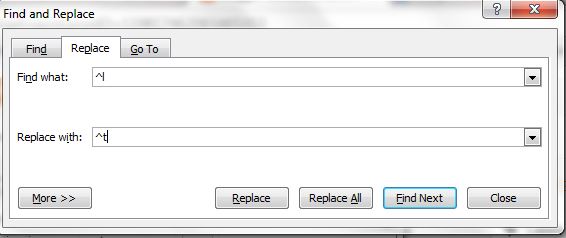
Replace line with tabs Find: ^l Replace: ^t

Select all text (Ctrl-A)
Convert text to table
Translating text into hebrew

Select the translated hebrew text and paste it in a new word document

You will need to edit the text to make sure that all the words were translated correctly.
Prepare the hebrew text to be merged with the pictures
: Find: ^l^l Replace with ^p
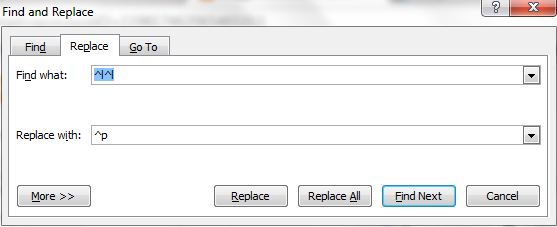

Find: ^p^l Replace with ^p


Find ^l Replace with " * "


Put in Nekudos

Select approximately 10 lines from the hebrew document.
Paste into the area on the right.
If there is a word that has the wrong nekudos, click on the word. Additional options to choose will appear.
Click נקד הכול.
Copy all the Text with nekudos
Paste it back into the word document and select another 10 lines of text
Keep adding nekudos until you have completed the whole document.
Get the hebrew text ready to be combine with English
Select All - Ctrl-A
Convert Text to Table (use * as the divider)

Select the two columns of text and copy
Combine hebrew, english, and pictures
Click on the table with the english words
On the Layout Tab, select Properties

Change the table to right-to-left

Insert two columns to the left of the pictures
Select the columns
Paste your words

You can now use your new dictionary.
You can sort it, or put it in davka writer to do further editing.
It sounds complicated, but once you get the hang of it - it's a breeze.
Monday, April 23, 2012
april 24 recap
Tefillah: Reviewed the idea from ברוך שאמר that ה's does miracles every day. This was a theme we really delved into with אדון עולם. Every day, before Tefilla, I asked each child to write one thing that was incredible that ה' until we came up with 100 things. I think asking a similar question again will be over kill.
Today we are focusing on ברוך שכר טוב ליראיו based on an idea I found on a great website Praying With Fire - http://www.prayingwithfire.org/images/Newsletter50.pdf.
Activity:
Chumash: Review: Today is a little bit of a change. We filled out the translation of yesterday's pesukim today instead of immediately after the lesson. With the video, some technology trouble and recess indoors, I couldn't print off the translation sheets in time. It will be interesting to see how many students could do their homework without this writing exercise. I use the writing of the translation as guided practice/independent practice for translating the pasukim so the students are able to do the homework with little parental help. I'll chalk this up to action research
I asked 3 students to join me at the back table and gave the other students the option to work alone, with me, or in a group. There is a column for Shorashim, Pronoun and tense so when the students finished reviewing what we learned yesterday, they could do skill building exercises. When they were done with that, I let them translate the upcoming pesukim for today as much as possible. Go, Differentiated instruction
פסוקים יד-יח - Uh, Oh, cool pesukim alert - the story of the Dudaim and Reuven, Leah and Rochel.
Since our translation sheets were out, we learned by filling out out the sheets first. Most of the students were far less engaged when the English was there and analyzed the hebrew text less. Some weaker students actually were able to come up with more questions
Hard words:
nouns: קְצִיר חִטִּ֗ים דֽוּדָאִים֙ אֹתָ֔ם חֲמִישִֽׁי שְׂכָרִ֔י
לָכֵן֙ הַֽמְעַט֙ שִׁפְחָתִ֖י דּֽוּדָאֵ֖י בִּימֵ֣י
שרשים: מצא, שכר, שכב
וַיָּבֵ֣א קַחְתֵּ֣ךְ שָׂכֹ֣ר שְׂכַרְתִּ֔יךָ נָתַ֥תִּי
יִשְׁכַּ֤ב תָּב֔וֹא
לִקְרָאת֗וֹ
Ivrit/: Limudei Kodesh. Since it is library day and long recess day, we will, do the grammar exercises at the end of the story. I wrote examples for Past Tense for he, she, and they in both kal and piel . We did one together and the rest independently. I was so proud that the students could conjugate II-י and III-ה with no problems
;Rabbi Akiva Story
As an introduction to sefira - I asked each student to write ;"How I can be like Rabbi Akiva." and then
"What my students will be like when I am a תלמיד/ה חכם
We put a list of answers on the board
This was a spring board into the story of the Aveilus of the students dying during sefira. I found the story in hebrew in a great series called מעגל השנה written by צ רוזנברג. It is a 4 volume set on the Jewish year that was adapted to the English series Round and Round the Jewish year by Feldheim.
Today we are focusing on ברוך שכר טוב ליראיו based on an idea I found on a great website Praying With Fire - http://www.prayingwithfire.org/images/Newsletter50.pdf.
Activity:
- Ask each student to list a favorite thing and rate it on the scale of 1-10
- Close your eyes and imagine that you get everything you enjoy x 1000.
- Ask what is the smallest easiest mitzvah they can do.
- Note that when they say ברוך שכר טוב ליראיו they will just have done a מצווה. We will pause, close our eyes, and imagine that Hashem is putting away all our enjoyment in עולם הבא.
Chumash: Review: Today is a little bit of a change. We filled out the translation of yesterday's pesukim today instead of immediately after the lesson. With the video, some technology trouble and recess indoors, I couldn't print off the translation sheets in time. It will be interesting to see how many students could do their homework without this writing exercise. I use the writing of the translation as guided practice/independent practice for translating the pasukim so the students are able to do the homework with little parental help. I'll chalk this up to action research
I asked 3 students to join me at the back table and gave the other students the option to work alone, with me, or in a group. There is a column for Shorashim, Pronoun and tense so when the students finished reviewing what we learned yesterday, they could do skill building exercises. When they were done with that, I let them translate the upcoming pesukim for today as much as possible. Go, Differentiated instruction
פסוקים יד-יח - Uh, Oh, cool pesukim alert - the story of the Dudaim and Reuven, Leah and Rochel.
Since our translation sheets were out, we learned by filling out out the sheets first. Most of the students were far less engaged when the English was there and analyzed the hebrew text less. Some weaker students actually were able to come up with more questions
Hard words:
nouns: קְצִיר חִטִּ֗ים דֽוּדָאִים֙ אֹתָ֔ם חֲמִישִֽׁי שְׂכָרִ֔י
לָכֵן֙ הַֽמְעַט֙ שִׁפְחָתִ֖י דּֽוּדָאֵ֖י בִּימֵ֣י
שרשים: מצא, שכר, שכב
וַיָּבֵ֣א קַחְתֵּ֣ךְ שָׂכֹ֣ר שְׂכַרְתִּ֔יךָ נָתַ֥תִּי
יִשְׁכַּ֤ב תָּב֔וֹא
לִקְרָאת֗וֹ
The kids love to have "Bais Medrash time" so when we finished learning the translation there was time for questions.
Best questions of the day: Pasuk 14 says that Reuven found dudaim in THE FIELD. Which field?
Rochel took Leah's husband? Isn't it the other way around
Best thought of the day: Leah must be davening for Rochel because that is why she got answered first.
Best questions of the day: Pasuk 14 says that Reuven found dudaim in THE FIELD. Which field?
Rochel took Leah's husband? Isn't it the other way around
Best thought of the day: Leah must be davening for Rochel because that is why she got answered first.
Ivrit/: Limudei Kodesh. Since it is library day and long recess day, we will, do the grammar exercises at the end of the story. I wrote examples for Past Tense for he, she, and they in both kal and piel . We did one together and the rest independently. I was so proud that the students could conjugate II-י and III-ה with no problems
;Rabbi Akiva Story
As an introduction to sefira - I asked each student to write ;"How I can be like Rabbi Akiva." and then
"What my students will be like when I am a תלמיד/ה חכם
We put a list of answers on the board
This was a spring board into the story of the Aveilus of the students dying during sefira. I found the story in hebrew in a great series called מעגל השנה written by צ רוזנברג. It is a 4 volume set on the Jewish year that was adapted to the English series Round and Round the Jewish year by Feldheim.
hebrew touch typing: online resource
Help your students learn how to type or you can Learn hebrew Touch typing level by level
Subscribe to:
Posts (Atom)
 test
test