Friday, April 20, 2012
do it yourself nekudos putter inner. Great online resource
So, now that I am teaching elementary school, I have noticed how many texts for young kids don't include nekudos. It really helps with comprehension but it is a pain to type out all the nekudos. I just found this resource that has saved me SO much time. Nakdan allows you to paste a short amount of text and it adds nekudos for you automatically.

Erev Shabbos Shmini recap
Today was a fun day.
Tefilla - we talked about how it is pretty cool that Hashem cares about each of us individually after all - we wouldn't care about each fly in our room and we should be equally as important. We also talked about how wonderous it is that we get rewarded for each deed we do.
We learned 4 Mishnayos from Perek 1 of Pirkei Avos and did paper folding projects to illustrate them. They are included here. I'll try to post pictures of them soon. I am sending the kids home with a translated perek to learn over Shabbos
I also love Parshas Shmini. We used the parsha sheets from Rabbi Mendel Balsam from Yeshiva of Spring Valley and the word finds from Rabbi Benyomi Hoffman. He also has soduku puzzles for each parsha
I printed coloring sheets by printing 4 pages on 1 sheet. It was a helpful reference when describing the animals and they understood that bats were halachically birds, not mammals from the picture.
Another nice alternative from chinuch.org are sheets from Rochel Possick.
To prepare: Aside from reading the pesukim (can't beat that) with Rashi, I used the Little Medrash Says on Vayikra to get a good sense of what is in the parsha. It is pretty comprehensive and includes topics from the pshat that were ignored by most other children's parsha material - such as בקרבי אקדש, or וידם אהרן.
Best question of the day: If the Mishna in Avos says that the world stands on Torah, Avodah & Gemilas Chasadim, and the gemara says that the Avodah only began on 1 Nissan 2449, how is it possible the world kept on existing. Answer (R. Yehoshua ben Levi): The 26 repetitions [of "Ki l'Olam Chasdo"] in Hodu correspond to the 26 generations from creation until Matan Torah - during that time Hashem's Chesed fed the world
Tefilla - we talked about how it is pretty cool that Hashem cares about each of us individually after all - we wouldn't care about each fly in our room and we should be equally as important. We also talked about how wonderous it is that we get rewarded for each deed we do.
We learned 4 Mishnayos from Perek 1 of Pirkei Avos and did paper folding projects to illustrate them. They are included here. I'll try to post pictures of them soon. I am sending the kids home with a translated perek to learn over Shabbos
I also love Parshas Shmini. We used the parsha sheets from Rabbi Mendel Balsam from Yeshiva of Spring Valley and the word finds from Rabbi Benyomi Hoffman. He also has soduku puzzles for each parsha
I printed coloring sheets by printing 4 pages on 1 sheet. It was a helpful reference when describing the animals and they understood that bats were halachically birds, not mammals from the picture.
Another nice alternative from chinuch.org are sheets from Rochel Possick.
To prepare: Aside from reading the pesukim (can't beat that) with Rashi, I used the Little Medrash Says on Vayikra to get a good sense of what is in the parsha. It is pretty comprehensive and includes topics from the pshat that were ignored by most other children's parsha material - such as בקרבי אקדש, or וידם אהרן.
Best question of the day: If the Mishna in Avos says that the world stands on Torah, Avodah & Gemilas Chasadim, and the gemara says that the Avodah only began on 1 Nissan 2449, how is it possible the world kept on existing. Answer (R. Yehoshua ben Levi): The 26 repetitions [of "Ki l'Olam Chasdo"] in Hodu correspond to the 26 generations from creation until Matan Torah - during that time Hashem's Chesed fed the world
Thursday, April 19, 2012
April 19 recap
I know I won't have time to keep this daily blogging up but a few more posts won't kill me.
A. Tefillah time - Reviewed yesterdays ideas. ברוך שאמר. I had the class try to figure out what was similar about the words אומר, עושה, מרחם etc. Once they got they were הווה words, we had a conversation about ה's ongoing presence, the מכות, Rav Chanina Ben Dosa lighting vinegar instead of oil.
B. Chumash: פרק ל: ד-ט. These were much easier pesukim. No deep questions. I had students read it without any preteaching since the kids knew at least 94% of the words and grammar rules as tested before on the Pre Perek Prep for פרק ל. I did pre-teach the Shoresh ד.ו.ן I drew a judge on the board and asked them what a בית דין is and what a דיין is.
Post learning - we discussed how נפתולי אלקים are tefilla. We reviewed how powerful לאה's tefillos were. with the proof being she got the Leviim, Kings, Kohanim and Talmidei Chachamim (this concept REALLY impresses third graders because kohanim in the beis Hamikdash are just so cool! ) and filled out our linear translation
Questions from the class:
What is the difference between an אמה as רחל calls בלהה and a שפחה as the Torah calls her?
Why does it say ותהר but then quantifies that בלהה was the one giving birth?
Why does it say with בלהה, and זלפה a 2nd son without mentioning there was a first and later with לאה that it was a 5th & 6th son but not a 1st, 2nd, 3rd, or 4th son?
Why is בלהה written with a B and a V sound?
עבר for all singular verbs with a II-י or a II-ו (such as ב.ו.א or ש.י.ם).
All the rules were written on the board. A sample שרש was written in blue and the conjugations were written in red to make it easy to use as a reference for the writing. I used a separate black board to list their requested words. No one wrote about vomit today. Baruch Hashem!
They had to write 4 sentences minimum because we only had 5 minutes
Their picture prompt was

D. Limudei Kodesh.
We read about Rabbi Akiva's leaving for Yeshiva, his return and subsequent immediate leav taking. The kids found this part of the story very moving. Rabbi Akiva Story
E. Gedolim - Rav Chaim Brisker - I started off by drawing my very crude European map and showing where Lithuania was. I explained how the period from post-Civil War to World War I was a time of big changes. I didn't mention the industrial revolution because it wasn't important today but I did explain the rise of nationalism and the interest in the common man on a third grade level. (Nationalism: Imagine if every street thought they were the best - I say Go Oakdale - B.G. says "Go Commonwealth" etc. Now imagine that we have airplanes and machine guns. Now imagine that we need to prove we are the best and get really insulted when you say you're better. Now imagine that different streets gang up with each other to stockpile weapons to fight the other streets. What is going to happen? Csars vs. Communists: Imagine if on your street there was a family who could walk into your kitchen any time and take your stuff, what would you feel? How would you fight this (1st. convince others its not fair, discuss it and then 2. fight) Then we spoke about why a dormitory yeshiva was a new idea. We also talked about how scientist classify information so they can communicate and research (talking about a mammal vs. a reptile is more useful than just talking about animals) and how the Brisker Method of classifying halachos could have the same results.
Homework was just reading and translating.
A. Tefillah time - Reviewed yesterdays ideas. ברוך שאמר. I had the class try to figure out what was similar about the words אומר, עושה, מרחם etc. Once they got they were הווה words, we had a conversation about ה's ongoing presence, the מכות, Rav Chanina Ben Dosa lighting vinegar instead of oil.
B. Chumash: פרק ל: ד-ט. These were much easier pesukim. No deep questions. I had students read it without any preteaching since the kids knew at least 94% of the words and grammar rules as tested before on the Pre Perek Prep for פרק ל. I did pre-teach the Shoresh ד.ו.ן I drew a judge on the board and asked them what a בית דין is and what a דיין is.
Post learning - we discussed how נפתולי אלקים are tefilla. We reviewed how powerful לאה's tefillos were. with the proof being she got the Leviim, Kings, Kohanim and Talmidei Chachamim (this concept REALLY impresses third graders because kohanim in the beis Hamikdash are just so cool! ) and filled out our linear translation
Questions from the class:
What is the difference between an אמה as רחל calls בלהה and a שפחה as the Torah calls her?
Why does it say ותהר but then quantifies that בלהה was the one giving birth?
Why does it say with בלהה, and זלפה a 2nd son without mentioning there was a first and later with לאה that it was a 5th & 6th son but not a 1st, 2nd, 3rd, or 4th son?
Why is בלהה written with a B and a V sound?
C. Ivrit - More journal writing.
I reviewed the concept of אני אוהבת לכתוב (Makor, transitive for regular verbs & III-ה
עבר for all singular verbsעבר for all singular verbs with a II-י or a II-ו (such as ב.ו.א or ש.י.ם).
All the rules were written on the board. A sample שרש was written in blue and the conjugations were written in red to make it easy to use as a reference for the writing. I used a separate black board to list their requested words. No one wrote about vomit today. Baruch Hashem!
They had to write 4 sentences minimum because we only had 5 minutes
- what a boy did
- what a girl did
- a sentence using verbs with II-י or II-ו
- What they see that they enjoy doing
Their picture prompt was

D. Limudei Kodesh.
We read about Rabbi Akiva's leaving for Yeshiva, his return and subsequent immediate leav taking. The kids found this part of the story very moving. Rabbi Akiva Story
E. Gedolim - Rav Chaim Brisker - I started off by drawing my very crude European map and showing where Lithuania was. I explained how the period from post-Civil War to World War I was a time of big changes. I didn't mention the industrial revolution because it wasn't important today but I did explain the rise of nationalism and the interest in the common man on a third grade level. (Nationalism: Imagine if every street thought they were the best - I say Go Oakdale - B.G. says "Go Commonwealth" etc. Now imagine that we have airplanes and machine guns. Now imagine that we need to prove we are the best and get really insulted when you say you're better. Now imagine that different streets gang up with each other to stockpile weapons to fight the other streets. What is going to happen? Csars vs. Communists: Imagine if on your street there was a family who could walk into your kitchen any time and take your stuff, what would you feel? How would you fight this (1st. convince others its not fair, discuss it and then 2. fight) Then we spoke about why a dormitory yeshiva was a new idea. We also talked about how scientist classify information so they can communicate and research (talking about a mammal vs. a reptile is more useful than just talking about animals) and how the Brisker Method of classifying halachos could have the same results.
Homework was just reading and translating.
Wednesday, April 18, 2012
Biographies - Teaching History to Third Graders
I hope to write a complete, well documented post about how and why I present the biography of a great Torah leader to the class. Until I have the chance to research and write the post, I'd like to mention how transformative teaching about gedolim to young children can be.
Every week, we read a biography of a gadol that I have written and edited. Most of the information, I am sad to say, is from wikipedia or other online sources but you use the tools you have to do what you can.
Gedolim time provides an opportunity to teach character building in a holistic way. I pick stories for their moral value. I knew that. It gives students a sense of their heritage. I expected that. But there is another side benefit. It has given me an opportunity to present important events in Jewish history to my students in an non threatening way. For third graders, Jewish history skips from the destruction of the Second Bais HaMikdash to the Holocaust. Teaching them about Rashi, the Ramban, up until Rav Moshe, Rav Nosson Tzvi Finkel has allowed me to introduce them to the time period of the Crusades, Communists, and even debilitating illness in a way that young kids can absorb without being overwhelmed. How do you explain the massacres of the Crusades? or the pogroms in Russia? But they can learn about how Rashi reacted to the Crusades, how the Ramban reacted to fleeing from his debates, etc.
Each week, I distribute a new gadol. The students put the new biography in their binder in the right chronological order. This helps them understand who lived before whom and what major events were happening in different locations. I draw a map on the board of Europe, Asia, and North Africa.
The kids love this story time and they now know a lot more about their heritage, geography, and Jewish history than they realize
Every week, we read a biography of a gadol that I have written and edited. Most of the information, I am sad to say, is from wikipedia or other online sources but you use the tools you have to do what you can.
Gedolim time provides an opportunity to teach character building in a holistic way. I pick stories for their moral value. I knew that. It gives students a sense of their heritage. I expected that. But there is another side benefit. It has given me an opportunity to present important events in Jewish history to my students in an non threatening way. For third graders, Jewish history skips from the destruction of the Second Bais HaMikdash to the Holocaust. Teaching them about Rashi, the Ramban, up until Rav Moshe, Rav Nosson Tzvi Finkel has allowed me to introduce them to the time period of the Crusades, Communists, and even debilitating illness in a way that young kids can absorb without being overwhelmed. How do you explain the massacres of the Crusades? or the pogroms in Russia? But they can learn about how Rashi reacted to the Crusades, how the Ramban reacted to fleeing from his debates, etc.
Each week, I distribute a new gadol. The students put the new biography in their binder in the right chronological order. This helps them understand who lived before whom and what major events were happening in different locations. I draw a map on the board of Europe, Asia, and North Africa.
The kids love this story time and they now know a lot more about their heritage, geography, and Jewish history than they realize
Biography of Rav Chaim Brisker - Rav Chaim Soloveitchik
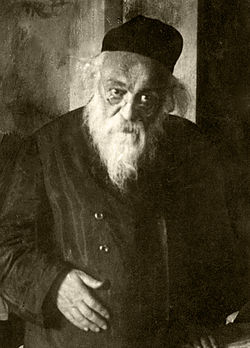
(1853-July 30, 1918)
Rav Chaim Soloveitchik was born in
Volozhin to his father Rav Yosef Dov Soloveitchik, the Beis HaLevi, who taught
in the famous Volozhin Yeshiva. When he was a few years old, his fathhr became
Rav in Slutzk. Rav Chaim quickly became known for his brilliance and remarkable
understanding.
When Rav Chaim was 20, he married Lipsha,
the daughter of Rav Raphael Shapiro, and the granddaughter of the Netziv who
was the Rosh Yeshiva of Volozhin. After Reb Raphael moved to become a Rav, Rav
Chaim became a Rosh Yeshiva with the Netziv in the yeshiva.
Rav Chaim began to teach gemara using
a new method known as the Brisker Method of learning. Every halacha is analyzed
and classified like a scientist. This helps talmidei chachamim understand the
gemara and halacha better. This method of learning is now used in all modern
yeshivos. Rav Chaim created a new vocabulary so that everyone could understand
the gemara better.
In 1892, the Czar forced the Volozhin
yeshiva to close. Rav Chaim moved to Brisk where his father was the Rav. When
his father died, he became the Rav. For this reason, he is known as Rav Chaim Brisker.
Rav Chaim wrote a very important sefer called Chiddushei Rabbeinu Chaim on the Rambam. His shiurim were
recorded by his talmidim in notes called "Rav Chaim's stencils.” Much of
his Torah has also been passed down by his talmidim. He had six main students; his sons Rav Moshe Soloveitchik (who moved to America), Rav Yitzchak Zev Soloveitchik (also known as Rav
Velvel or the Brisker Rav who moved to Yerushalayim), Rav Baruch Ber Lebowitz, Rav Isser Zalman Meltzer, Rav Elchonon Wasserman hy”d, and Rav Shimon Shkop. The talmidim of these 6
students have led the Torah world.
Only Emes
Rav Chaim did not write down his chiddushei
Torahh imself. His sons or a shochet in Brisk, Reb Noach, would do so. One
Shabbos on Erev Chanuka, Reb Noach was called to the house to record the
chiddushim. Rav Chaim spoke for several hours while Rav Chaim wrote 12 full pages.
Suddenly, Rav Chaim took the pages and tore them beyond recognition because he
said there was a mistake in his ideas. His Torah could only be the truth.
Only
Torah
During
World War I, Rav Chaim Brisker and familywere forced to flee to Minsk. A Rav
went to visit him. The house was in complete disarray. 5 children were sleeping
on a board. There was little food. Rav Chaim was resting in a chair. Rav Chaim’s
son, Rav Velvel and his son-in-law were trying to clarify the Torah they had
just learned from Rav Chaim. Rav Chaim awoke and started to correct the
complicated topic he had just taught. Only then did he acknowledge the Rav’s
visit. Rav Chaim was able to ignore everything else that was going on because
of his quest for the Torah.
This
Rav also mentioned how Rav Chaim had many locks on his doors when in Minsk. The
reason was that city had many cruel Jews who were trying to take Jewish
children away from Torah and did not do chesed for the poor properly. He locked the door many
times so he would not learn from them. Once, they sent him special flour so he
wouldn’t get sick. He returned the flour to be given to others who were poorer
and in greater need.
Rav HaChesed
Rav Chaim Brisker
changed Torah learning all over the world. Yet, at the time he was niftar, this
was not what was remembered the most. What everyone remembered was his chesed. On
his matzeiva was written the description “Rav HaChesed”
Rav Chaim’s house was
open to all. In Rav Chaim’s living room, beggars would put notices up on the wall. They
would sleep on his couches. He would always be careful not to disturb them. Sometimes,
his wife or children would walk into the bedroom and find that Rav Chaim had
invited some poor people to sleep there and noone in the family had beds.
There was a huge fire in the town and
many homes were destroyed. Rav Chaim devoted himself to helping the penniless
survivors. Rav Chaim insisted in sleeping in the hallway of the shul. He asked
how he could sleep in his bed if there were so many who didn’t even have a roof
over their heads.
Rav Chaim was once having an important
meeting with the Bais Din in Brisk. A pauper came into the room, ate Rav Chaim’s
lunch and fell asleep on his couch. Rav Chaim warned everyone there not to
disturb the poor man.
Mothers would leave
their babies on his doorstep if they were unable to take care of them or the
babies were too sick. Rav Chaim hired women to feed the babies and cared for
them in his home.
The people of town paid Rav
Chaim to be their Rav. However, whenever he got a pay check, he immediately
gave it away to tzeddaka. They had to give the money to his wife to insure that
they would have food.
Rav Chaim had a rule. Anyone
could ask for something and the family would need to give it without a
complaint. Once someone asked Rav Velvel for his pen. Rav Velvel was in the middle of writing
some of the chidushei Torah of Rav Chaim. Rav Velvel asked him to wait a
minute. Rav Chaim got very upset and said “what is going on here that we don't
lend our pens..." (Holchei Nesivos - Middos Tovos)
Rav
Chaim changed the world of Torah. We are all talmidim of his because of the
Brisker method, the yeshivos that were founded by his talmidim and from
learning about his chesed.
Teaching shorashim: Before a unit
Before a new unit (1/2 perek - whole perek)
a) the students try to translate every word/root/prefix/suffix on the PPP (pre-Perek-Prep) as they can. I divide each section into 2-3 levels so the students can always feel mastery over a section. This mastery gives them confidence as well something for which to strive. Pre Perek Prep for פרק ל.
b) they look up the rest on the reference sheets in the front of their binder. Vayeitzei Shorashim List Vayeitzei Noun Word List Binyanim charts

Orange is for verbs
Yellow is for common nouns and adjectives. When the whole class has these mastered, they get put away.
Green- hard words or new words.
As we learn the pesukim, the students put the cards in the pesukim up on top.
These cards can be used for review games of all kinds
We are now ready to get to the fun part - exploring, debating and discussing the text
Teaching shorashim: Why bother?
So many people come to my blog after googling "teaching shorashim." Obviously this is a topic of great interest.
Knowing hebrew roots (shorashim) is the foundation for being interested in learning independently. In other words, the more basic hebrew vocabulary a student knows, the more likely he is to experiment and try to learn more pesukim on his own. According to Jeanne Gunther, Students learn independently when they can understand 94% of the text. Instruction takes place when they understand 90-94% of the text. Frustration comes when they know less than 90% of the text. The goal is to have the students at the 90-94% before they open the chumash and become frustrated.
I have taught high school and some students didn't know basic shorashim or common nouns. How could they hope to learn on their intellectual level when they are so hampered by their inadequate vocabulary knowledge?
I began teaching third grade with a desire to help the high school students who gave up before entering my class. In the early elementary grades, learning is exciting and so much can be taught in this short window of time.
My system for teaching shorashim is based on the fact that
b) there are different modalities of learning
c) keeping it fun keeps students motivated
d) pre-learning vocabulary gives students a sense of accomplishment and control
e) It is important for students to have the resources so they can learn independently if they choose.
f) Students haven't learned enough to differentiate between "common" vocabulary words and "rare" vocabulary words. If the words are taught in a memorable way, some students will remember most of them forever. All students will remember a lot of them forever especially if there is adequate review.
g) Every student should be in the 90-94% window before we learn a pasuk.
Knowing hebrew roots (shorashim) is the foundation for being interested in learning independently. In other words, the more basic hebrew vocabulary a student knows, the more likely he is to experiment and try to learn more pesukim on his own. According to Jeanne Gunther, Students learn independently when they can understand 94% of the text. Instruction takes place when they understand 90-94% of the text. Frustration comes when they know less than 90% of the text. The goal is to have the students at the 90-94% before they open the chumash and become frustrated.
I have taught high school and some students didn't know basic shorashim or common nouns. How could they hope to learn on their intellectual level when they are so hampered by their inadequate vocabulary knowledge?
I began teaching third grade with a desire to help the high school students who gave up before entering my class. In the early elementary grades, learning is exciting and so much can be taught in this short window of time.
My system for teaching shorashim is based on the fact that
b) there are different modalities of learning
c) keeping it fun keeps students motivated
d) pre-learning vocabulary gives students a sense of accomplishment and control
e) It is important for students to have the resources so they can learn independently if they choose.
f) Students haven't learned enough to differentiate between "common" vocabulary words and "rare" vocabulary words. If the words are taught in a memorable way, some students will remember most of them forever. All students will remember a lot of them forever especially if there is adequate review.
g) Every student should be in the 90-94% window before we learn a pasuk.
April 18 recap
A. Tefillah time - the class tried to move the water bottle today by saying "Move!" no luck. I asked them to think of how I can change the world using just my words - one student figured out the riddle. We did Think, Pair, Share to think of positive things we can say to others to change the world.
B. Chumash:
Acting out the shorashim was a huge hit.
Future note: the students will be MIMES (no sound) and must remain seated to qualify. After the first round of teaching, we did a rapid fire round of MIME shorashim. The students filled out their linear translation independently or with me depending on skill level.
Some awesome questions (from third graders!) (Yes, I did have a timer on because otherwise the kids see it as a free for all and less inquisitive kids know there is an end to this time: 1) if Sefer Bereishis is supposed to teach us how to act based on the Avos, how come it would say that Rochel was jealous?
Important Concepts: I introduced a very important concept - that of הוי דן את כל האדם לכף זכות. The halacha is that is obligatory to judge a tzaddik even in the face of very negative evidence, it is a good thing (but not obligatory) to judge a beinoni (average) person meritoriously, and a known sinner can be judged by appearances. The Avos are the ultimate in tzaddikim so it is obligatory for us to understand how it is possible for a great person to do something when it appears superficially to be wrong. Jealousy - קנאת סופרים תרבה חכמה. Rashi 30:1

Future note: Have the sheet projected on the board so that I can show each step of the directions. I also used an Ipod App that allowed me to type in a word in english and it would Translate it on the spot for the students. Saves time and is fun.
D. Limudei Kodesh.
We only had time to read about Rabbi Akiva's initial learning and then his leaving for yeshiva. I read the story and acted out or gave alternate hebrew definitions for the harder words. I translated a few words to speed things up.
Follow up exercise to test reading comprehension of the story: Draw a picture of Rabbi Akiva learning when he first started to learn in a school and then when he was in yeshiva. The students wrote sentences about what they know how to do to contrast with what R' Akiva doesn't know what to do.
Homework: Review for פרק ל:א-ג
Tuesday, April 17, 2012
Updates from the Classroom: April 17 recap and 4/18 lesson plans
I have so many ideas I'd love to write about but 1. I don't have time, 2. it would be a waste of other peoples time. So here is a short post of what I may be doing tomorrow in school.
A. Tefillah time - After brachos, we do an activity to make few words in tefilla come alive. We just began ברוך שאמר.
Today: I asked the class today to try to move a pencil by looking at it. Then, the class said, "Move!" but the pencil didn't move. how amazing it is that Hashem said and the world came from nothing into something.
Tomorrow: I will ask the class to think of a time when a few words created or destroyed something
B. Chumash:
Today we did Post Perek Play - a game on shorashim. I showed a שרש and one student from each team ran up to the board and wrote down its translation. The team of whoever wrote it first got the point. We also did a Pre Perek Prep for פרק ל The kids had the word lists for the upcoming perek and had to fill out the basic words first, get them checked and then could use their reference lists Vayeitzei Shorashim List Vayeitzei Noun Word List to fill out all the hard words. Lowest score on level 1 words 27/30! I have to review prefixes though - Students didn't know the difference between בְּ and בַּ
Tomorrow: פרק ל פסוקים א-ג. (I'll be lucky to complete the first two pesukim before being deluged with questions.). These pesukim are VERY interesting. I need to do the heavy lifting of teaching the translation before the students actually understand the pesukim. Otherwise, they will be too excited to learn to translate the pesukim independently.
Questions to explore based on classes interest:
 C. Ivrit: I learned from the second grade secular studies teacher, Ms. Leo, who is getting a masters in literacy, how important it is to journal. The students use all their skills talking, writing, listening and speaking when a journaling lesson is done correctly. The students get a 5 minute pre lesson on grammar or vocabulary. We practice the skill by having conversations. Then they must incorporate the lesson into their 15 minutes of journal writing. There is a prompt to start them off but the rest is up to their creativity.
Today, I had the class in their editor-in-chief mode. I gave out some sentences the students had written yesterday to correct. We were working on writing first person sentences in past tense - עבר, אני. We start our עברית עבר lessons by taking a shoresh, conjugating it in past tense while clapping the syllables. The rhythm helps the students self correct their own work.
Tomorrow, we will be writing using second person past tense. Here is the picture prompt. There is a full page of lines to finish the story for the more advanced students.
D. Limudei Kodesh.
Yesterday, we had a great cooperative learning lesson on the Omer using the Jigsaw method. The class was split into groups of three. They read the story as a group with each student taking one paragraph. Then, they illustrated the comics based on the story. They answered one section of the questions. Then they joined with students from other groups to complete the answers to the other questions. Omer Story
Today we learned about R' Akiva. I wrote a story about Rochel and R' Akiva in hebrew based on a similar story found on chinuch.org. I typed up the story and added some details. The students all know that R' Akivas students die so it is meaningless to them. Hopefully, becoming attached to R' Akiva as a man who worked so hard to become a teacher will make the story fresh.We read a bit of the story and discussed it in hebrew using basic question prompts.
Tomorrow Continue with the part of the story where R' Akiva leaves to learn Torah, his return, his leaving again.
Rabbi Akiva Story
End of Day: Write Homework in Yoman. RT (Read & Translate) פרק ל: א-ג R (Read only) ד-י. Written homework TBD tomorrow.
On tap for Thursday: Tefillah, Chumash, Gadol of the week biography . . . I'm thinking about writing about the Vilna Gaon and the Baal Shem Tov next week. We pretty much did the early 20th century in the different cultures, It's time to rewind to pre American Revolution times. Plus, some Pirkei Avos. Hopefully some Ivrit journaling if there is time.
Friday: Tefillah, Chumash & Parsha time
A. Tefillah time - After brachos, we do an activity to make few words in tefilla come alive. We just began ברוך שאמר.
Today: I asked the class today to try to move a pencil by looking at it. Then, the class said, "Move!" but the pencil didn't move. how amazing it is that Hashem said and the world came from nothing into something.
Tomorrow: I will ask the class to think of a time when a few words created or destroyed something
B. Chumash:
Today we did Post Perek Play - a game on shorashim. I showed a שרש and one student from each team ran up to the board and wrote down its translation. The team of whoever wrote it first got the point. We also did a Pre Perek Prep for פרק ל The kids had the word lists for the upcoming perek and had to fill out the basic words first, get them checked and then could use their reference lists Vayeitzei Shorashim List Vayeitzei Noun Word List to fill out all the hard words. Lowest score on level 1 words 27/30! I have to review prefixes though - Students didn't know the difference between בְּ and בַּ
Tomorrow: פרק ל פסוקים א-ג. (I'll be lucky to complete the first two pesukim before being deluged with questions.). These pesukim are VERY interesting. I need to do the heavy lifting of teaching the translation before the students actually understand the pesukim. Otherwise, they will be too excited to learn to translate the pesukim independently.
- Give out blank lined paper to each student for notes and questions.
- pre teach the shorashim , שרשים קנא, בנה, מנע, מות, הבה and בטן ברכיים by acting out these words (gross motor skills)
- Have students look for challenging words in the pesukim.
- Write all words asked on the board with translations.
- Ask the students to try to read the pasuk independently or with a partner and tell their partner what they think ishappening. Have them write any questions on the paper.
- answer questions in 5 minute increments using timer to keep on track. Intersperse rest of lesson with skill work and questions
- Call on volunteers to read. Have students continue to jot down thoughts on notes.
- teacher read pesukim
- class read pesukim
- Fill in the linear translation as a review and to incorporate fine motor skills into lesson.
Questions to explore based on classes interest:
- How could Rochel be jealous?
- When can jealousy be good or bad?
- How do Chazal look at this jealousy?
- Why did Rochel say she would die?
- Why did Yaakov get angry?
- Why did he answer her this way?
- How do Chazal view this anger?
- Why did Rochel give Yaakov Bilhah as a wife?
Today, I had the class in their editor-in-chief mode. I gave out some sentences the students had written yesterday to correct. We were working on writing first person sentences in past tense - עבר, אני. We start our עברית עבר lessons by taking a shoresh, conjugating it in past tense while clapping the syllables. The rhythm helps the students self correct their own work.
Tomorrow, we will be writing using second person past tense. Here is the picture prompt. There is a full page of lines to finish the story for the more advanced students.
D. Limudei Kodesh.
Yesterday, we had a great cooperative learning lesson on the Omer using the Jigsaw method. The class was split into groups of three. They read the story as a group with each student taking one paragraph. Then, they illustrated the comics based on the story. They answered one section of the questions. Then they joined with students from other groups to complete the answers to the other questions. Omer Story
Today we learned about R' Akiva. I wrote a story about Rochel and R' Akiva in hebrew based on a similar story found on chinuch.org. I typed up the story and added some details. The students all know that R' Akivas students die so it is meaningless to them. Hopefully, becoming attached to R' Akiva as a man who worked so hard to become a teacher will make the story fresh.We read a bit of the story and discussed it in hebrew using basic question prompts.
Tomorrow Continue with the part of the story where R' Akiva leaves to learn Torah, his return, his leaving again.
Rabbi Akiva Story
End of Day: Write Homework in Yoman. RT (Read & Translate) פרק ל: א-ג R (Read only) ד-י. Written homework TBD tomorrow.
On tap for Thursday: Tefillah, Chumash, Gadol of the week biography . . . I'm thinking about writing about the Vilna Gaon and the Baal Shem Tov next week. We pretty much did the early 20th century in the different cultures, It's time to rewind to pre American Revolution times. Plus, some Pirkei Avos. Hopefully some Ivrit journaling if there is time.
Friday: Tefillah, Chumash & Parsha time
Monday, September 12, 2011
September 11, 2001 - The end of a year - the beginning of a decade
We all remember September 11 and where we were when the world we knew was shattered.
I remember September 11 as the bookend of a terrible year. A year earlier, on September 28, 2000, I was on a number 2 bus going to my job in the Old City when Israeli soldiers boarded. They shouted at us to quickly get off the bus for our own safety. Ariel Sharon had visited the Temple Mount and the second Intifada started. There were raised voices and pushing as I walked to work under the watchful eyes of armed soldiers. Outside my office, I could hear clashes between soldiers and rioters. My sense of security had been shattered. For the next few months, my commute to work became tense as stones would rain down on the bus as we passed through hostile neighborhoods.
That was just the beginning. Soon after, there was the lynching in Ramallah and nightly shootings into random apartments in Gilo. There was a bus bombing in Machane Yehuda. I don't know why, but in my mind, I can hear the explosion and then the immediate sound of sirens racing through the city.
In November 2000, we had to return to the States for personal reasons hoping we could return soon. The bombings in Israel never stopped. They bombed malls, buses and discos hoping to hurt as many innocents as they could. Who can forget the images of the chidlren who lost limbs in the Kfar Darom school bus attack, the teenagers who were maimed and murdered in the Dolphinarium discotheque, or the young lives snuffed out shopping in a Mall?
On August 9, 2001, the terrorists detonated a bomb in Sbarro's pizza during the lunchtime rush. A family with 5 of their children had come that day to escape from the frequent shootings in the North. Only 2 of their daughters survived the day with injuries. The three older brothers who did not join the family outing were left to identify the bodies of their parents and their three siblings who were killed. One hundred and twenty people were injured and 15 were killed for the crime of going to eat pizza.
My husband and I moved into an apartment in Washington Heights in the middle of August. I was somewhat relieved as every few weeks we heard about another horrific attack on women and children who were going about their daily lives.
Yet, terror did not stop at Israel's borders just because I had wished it to be so. It visited the United States with a viciousness and inhumanity we had come to know over the previous year. This time, 3000 fathers and mothers, sons and daughters, sisters and brothers were killed and a country was shattered.
That event changed us all, but it did not change them. Ten years later, the disregard for human life has not ceased. This disregard does not read maps and does not respect borders. It bows to no politician and does not listen to reason. It is evil.
In the last ten years, our world has tried to deny the existence of evil giving reasons and rationale for its existence. But having witnessed the evil, and having seen the faces of the victims I know one thing. This evil cannot be explained, and it cannot be placated. It must be recognized as such. It must be fought and protested. Because, if we allow evil to take root in one place, it won't be satisfied. It will merely spread its tentacles into our lives wherever we may be.
Sunday, July 17, 2011
Divrei Chizuk given l'ilui nishmas Yehuda ben Nachman - Leiby Kletzky
This past week, there was a tragedy in Klal Yisrael. A young boy was murdered by a member of our community. We were all profoundly and sincerely shocked. Ten thousand people came to a funeral and countless others listened to the funeral over the phone.
If you listen to the news reports and read the news stories it was not only the Jewish community who were shocked. The whole of New York City has been mourning. Bill Ritter from ABC news filed this news report:
I went to the Kletzky home in Borough Park this morning to visit the family.
I was honored that they welcomed me in. I was honored to pay my respects.
This is a family deep in mourning. 6 children, five of them girls. Leiby was their only son.
They are surrounded by an extended family - and surrounded as well, clearly, by a lot of love.
The family members I talked to want the world to know what a sweet and thoughtful little boy this was. They also want us to know that this tight knit Orthodox community rallied quickly to search for Leiby - thousands were out - combing the neighborhood grid more than 17 times. And finding the surveillance video that ultimately helped solve this crime.
I was also able to talk to Leiby's mother and father.
I told them that while their pain is theirs alone - we all share a bit of it. And by we, I mean millions - because this tragedy has affected the entire City.
And then his father offered this: He said he was proud to have been Leiby's father for nearly 9 years - and that if somehow his death is bringing so many people together - then what a great tribute to his boy.
I thought twice about going, but I was drawn there. And I'm glad I could express to Leiby's parents what so many other New Yorkers are feeling.
A tragedy has a city of 12 million saying מי כעמך ישראל. Something has finally gotten through our defenses. We feel overwhelmed and ready to come back to a life of Truth and abandon our pretenses of being someone who we are not. What can we do?
ותשחק ליום אחרון
There is one story in Tanach that comes to mind to give us direction. It was Rosh Chodesh Nissan and. Klal Yisrael were in the desert. A few months before, on the 17th of Tamuz, the Jewish people had worshipped the golden calf. After the sinners had been killed by Moshe and the Leviim, the people had wondered- Would Hashem reject them? Would he leave them in the desert to die? Would he say you are not worthy to be my people? No, Hashem still wanted them as a nation and still loved them. He wanted to make a home with them right there and then, in the Midbar in a Mishkan, with those people who had sinned.
When the structure was complete, the people celebrated for a full seven days, Each of those days, Moshe did the service and taught Aharon and his sons how to bring Hashem into His home every day.
On the eighth day, Rosh Chodesh Nissan, this home was inagurated and Hashem was to move in. It must have been like a wedding with anticipation and joy at its peak.
The pasuk describes the emotions of the moments after Aharon brought his first korbanos. While Aharon was stilling standing on the Mizbeach he blesses Klal Yisrael – showering them with love and hope for the future. Then Moshe and Aharon go into the Mishkan and together they bless the nation. Finally, the glory of Hashem appears to the whole nation and Hashem accepts the korbanos. The relationship of Hashem and his nation has been restored.
and when all the people saw it, they shouted, and fell on their faces.
Bnai Yisrael let out cheers of joy and happiness for what they had experience and then they prayed for their future. They were surrounded with feelings of joy and excitiement and love.
And then tragedy stuck.
וַיִּקְחוּ בְנֵי-אַהֲרֹן נָדָב וַאֲבִיהוּא אִישׁ מַחְתָּתוֹ, וַיִּתְּנוּ בָהֵן אֵשׁ, וַיָּשִׂימוּ עָלֶיהָ, קְטֹרֶת; וַיַּקְרִיבוּ לִפְנֵי יְהוָה, אֵשׁ זָרָה--אֲשֶׁר לֹא צִוָּה, אֹתָם. ב וַתֵּצֵא אֵשׁ מִלִּפְנֵי יְהוָה, וַתֹּאכַל אוֹתָם; וַיָּמֻתוּ, לִפְנֵי יְהוָה.
1 And Nadab and Abihu, the sons of Aaron, took each of them his censer, and put fire therein, and laid incense thereon, and offered strange fire before the LORD, which He had not commanded them.
Two of the men who were the focus of this day, Nadav and Avihu were killed in front of all the Jewish people. They had gone into the Kodesh Hakedoshim to offer ketores when they were not allowed, and they were killed.
The whole nation were shocked by the tragedy they just saw. The nation stood to see what נדב and אביהוא’s father would say. They would take his cue as to how they should react.
וידם אהרן - Aharon was silent. He knew that this was something he could not explain. He did not question and did not waver in his faith. וידם אהרן.
This is a lesson that klal Yisrael has learned from Aharon. Last week, we too had front row seats to a child being killed. We saw the search, and we saw the arrest. And we heard a father at his son’s funeral say Hashem nasan, Hashem lakach, Yehi shem hashem mvorach. Hashem gives and He takes, may the Name of Hashem be blessed.
That was one lesson. There was another lesson from that episode as well. And that was the response of Nadav and Avihu’s mother Elisheva. רבינו בחיי quotes a medrash . שהשמחה אינה ממתנת לאדם בעוה"ז, לא כל מי ששמח היום שמח למחר ולא כל מי שמצר היום מצר למחר. Happiness isn’t given to man in this word. Someone who is happy today is not happy tomorrow, someone who is pained today is not pained tomorrow.
The Medrash brings examples - Hashem made the world and then had to bring the mabul. Avraham won a war, had a child, withstood the test of being ready to sacrifice his son only to lose his partner Sarah and suffer the indignity of having to negotiate a burial spot for her. The Medrash mentions other great people, Yitzchak, Yaakov, Yehoshua all of whom had lives that had times of joy and periods of tragedy and loss
The Medrash continues that there was one person who taught this lesson to the Jewish people like no one else in history. Elsiheva – the wife of Aharon, mother of Nadav and Avihu.
אלישבע בת עמינדב אין לך איש ואשה בעולם שראתה שמחות גדולות כמותה,
There is no man or women in the history of the world who witnessed as many large celbrations as she.
- She saw her husband become the כהן גדול, her brother-in-law become king and speak to G-d, her sons become assistant Kohanim and her brother, Nachshon become the chief of all princes of Israel.
Yet her happiness didn’t last long, for on the day of all these celebrations, Elisheva’s two sons walked into the Mishkan to bring a Korban and they were carried out burned to death.
The nation saw a women transition from being the most celebrated woman of all time to a woman deep in mourning. They learned from her that happiness in this world is not dependable and should never be pursued as a goal unto itself.
How did Elisheva survive this trauma and loss? How could she go on? The Medrash in Mishlei teaches us how she did it. The pasuk in Mishlei says - עוז והדר לבושה - ותשחק ליום אחרון Elisheva was able to survive this tragedy with Oz with strength and hadar with dignity. Others had spent their lives focused on their levush, their externals. She had concerned herself with doing Mitzvos and building strength of character,
When tragedy struck in the height of her happiness, she was ותשחק ליום אחרון. She laughed to the last day. She said to herself and others that only true happiness would come in Olam Haba, in the World To Come. In the meantime, she would do that which was right and wait for that day to experience joy.
How do we become like Elisheva? How do we have her Oz and Hadar when things don't go the way we hope and dream? We must be looking to the Yom Acharon, to our final day. We can't go through life rudderless. We must decide on the goals in life that will bring us to the joy of the World of Truth.. And then we must think forward 5 years from now - how will I be closer to what I want to achieve? In one year, how will I be different? Then we must become very practical - how am I going to make this a reality?
We forget our commitments, We procrastinate because we get busy and the task gets overwhelming. So we must also ask ourselves - what is the very next thing I need to do? And then we must do it. We must keep walking step by step until our goals are achieved.
One of my life goals is to stop speaking Lashon Hara. But this goal of is very broad and practically impossible. My short term goal might be to learn the halachos of Lashon Hara. But even that is too amorphous. I need to think – what is the next action I need to take to learn the Halachos of Lashon Hara. That action may be to find a book, or to decide when to learn. I must commit to doing that one act which will lead to the next act which will lead to my Yom Acharon, my final day.
One of my goals for my life is:
In 1 year, I will:
The next action I need to take to reach that goal is:
|
Olam Hafuch Ra’isi
When Nadav and Avihu were killed. Hashem explained to Moshe why they died. His answer was בקרבי אקדש - With those who are close to me I will be made holy
Has there been a bigger kiddush Hashem in recent memory then the actions of the Kletzky family? The front page of the New York papers report that Nachman Kletzky thanked Hashem for the years he spent with his son. They carried pictures of the thank you note the Kletzky's posted outside of their home during their intense grief.. We have all now seen the greatness that comes from a life of Torah. And what of the kiddush Hashem of all the Jews who searched Boro Park in a heat wave? Or of the 10,000 Jews who stood to pay respects at a funeral sobbing over the lost life of one child who was not their own?
Who is this man about whom Moshe said “With those who are close to me, I will be made holy” Mr. Kletzky drives a car service van. In all the stories I heard from my grandmother, she always described a simple Jew as the baal agalah - the wagon driver, the man who worked hard to support his family. He isn’t a Rav or a Rosh Yeshiva, a genius or rich. He was a simple, average Jew – the man who got people from one place to another. .
In our day and age, in our parables, we might update the story by saying that the simple Jew works for a car service. If we would have heard about Mr. Kletzky in any other context, we would assume that he was unimportant. But he was the one to bring about the kiddush Hashem! Bkrovai Akadesh! With those who are close, I will be made holy!
The Gemara in Bava Basra tells a story of Rav Yosef son of Rabbi Yehoshua who is dead and comes back to life. He is asked what he saw on the other side. He responds “I saw an olam hafuch (an upside down world). The elyonim (‘high’ people) were low and the tachtonim (‘low’ people) were high.” His father responds “You saw an olam barur (a clear world)!”
We need to learn a lesson. This is an Olam Hafuch. We don’t and can’t know who is important and who is not. We can and must stop adding to the confusion.
It’s natural for us to rank people. I work in an elementary school. The kindergarten kids are always pushing and shoving who will be first in line. We try to stop them by having line leader, or assigning spots, but the kids keep pushing. They are afraid that if someone else is first, they are somehow diminished.
We don’t grow out of it. In third grade, the kids don’t push for space in line, but they start competing in other ways. “I don’t use crayons, I only use colored pencils!”
As we get older, we push in more subtle and sophisticated ways, still jockeying for that line leader position, but this times in other areas including competing with how spiritually attuned we are.
When someone tells us something they have done or thought, we jump in “I don’t let my kids eat that/wear that/ say that/ watch that. I would never go there/eat from there/ not buy from there/ or do that. We subtly put down what others are doing and let them know that we rank higher than they do.
We do this because this is an Olam Hafuch. We judge and we rank, we slice dice and divide. But we know nothing. It is an olam hafuch.
In Selichos we will say,
שאין אנו עזי פנים לומר לפניך ה׳ אלקינו אבותינו, צדיקים אנחנו ולא חטאנו, אבל אנחנו ואבותינו חטאנו׃
We are not so brazen to say before you Hashem, that we are righteous and have not sinned, but we and are fathers have sinned.
When we want to volunteer to someone that we do something better then they do, let’s remind ourselves that we have no idea of who we are and who they are. We know we are sinners but they may be the close ones of Hashem.
Ahavas Yisrael
Another lesson we saw played out before our eyes was the power of Ahavas Yisrael. In this tragedy, we all searched and we all mourned, We didn’t look at the group before caring. We didn’t dredge up the history of all the slights we experienced. How do we continue this sense of family for longer?
The Ramban has a very powerful explanation of the mitzvah of ואהבת לרעך כמוך, He explains that the mitzvah means that we should want for our friend that which we want for ourselves. It’s a hard challenge. We may be happy if someone has a good job, a thoughtful spouse, cute children, nice clothing, but it is hard to be happy if they have everything we want for ourselves when we don’t have them.
How do we reach a level where we can truly want others to have all the good we hope for ourselves. We do it one step at a time.
One of the main things that we want for ourselves is to feel good when we are dealing with other people.
Take a moment to think of five feelings you would like to experience when you are dealing with others. *
Take a moment to think of five feelings you would like to experience when you are dealing with others. *
1. 2. 3. 4.. 5.
If you talk to a few friends and find out what their list includes you will have a list of what we all want to feel when we dealing with someone else.
When I was speaking to a group, our list included
Being validated
Listened to
Not Judged
Given the Benefit of the Doubt
Accepted
Welcomed
Befriended
Respected
I want to feel respected when I talk to you. According to the Ramban, shouldn't I want you to feel respected as well. Shouldn't she feel befriended, welcomed, listened to?
How do we make sure that happens. It is actually easier than it might seem. We need to think what would make me feel welcomed? By writing it down, I commit to trying to help others feel like I would want to feel.
How do we make sure that happens. It is actually easier than it might seem. We need to think what would make me feel welcomed? By writing it down, I commit to trying to help others feel like I would want to feel.
We need to be as specific as possible. If we leave it vague by saying we will be nice, nothing will ever change. But if we write down a concrete, quantifiable behavior, we may make a real change. For example, to make someone else feel welcome, we could greeting them by name and make eye contact. Even if we are in a rotten mood, we will still make the other person feel welcome because we have a clear action to do.
This exercise is so important for us to do. It forces us to think about our impact on others. It is also important to do with our families and with our friends. It creates a culture of kindness and a commitment ot Ahavas Yisrael.
* based on the research and program of the Ruler Approach
This exercise is so important for us to do. It forces us to think about our impact on others. It is also important to do with our families and with our friends. It creates a culture of kindness and a commitment ot Ahavas Yisrael.
5-8 Feelings I would like to feel when dealing with others and what I can do to make others have these feelings (as concrete and specific as possible)
#1 ______________________________________________________ _________________________________________________________
#2 ______________________________________________________ _________________________________________________________
#3 ______________________________________________________ _________________________________________________________
#4 ______________________________________________________ _________________________________________________________
#5 ______________________________________________________ _________________________________________________________
#6 ______________________________________________________ _________________________________________________________
#7 ______________________________________________________ _________________________________________________________
#8 ______________________________________________________ _________________________________________________________
|
* based on the research and program of the Ruler Approach
It's From Hashem
I saying these ideas to a group of women. When I concluded, we started to discuss what could have been done differently. We asked perhaps if more people were paying attention as he walked down the street, if parents were more careful, this wouldn't have happened.
One woman spoke up that affected us all. A number of years ago she had lost her son. She said "When my son died, I was upset. How could so many people do the wrong thing. If only one of them had done the right thing, my son would have been saved. Then four years later, there was a man in the community whose heart stopped while he was in shul. There were so many people there at that moment who had to be there for him to still be alive. If Hashem had to arrange each of those people to be there to do the right thing for him to live, Hashem had to arrange all of those people who each had to do the wrong thing for my son to die.After four years, I had nechama for all the people who did the wrong thing" She continued "This was the first time this boy walked by himself, and that time he found the one person in a million who would do such a thing. Hashem had to arrange this as well."
Conclusion
There is so much we want to do when our eyes are opened to the Truth. But then the inspiration fades and old habits pull us back to old behaviors. Let’s think about what are our life’s goals and commit to doing the one thing on our journey to get there. Let’s not volunteer information if it is only said to rank ourselves and others. And finally, let’s implement some suggestions of making others feel good when they are with us so we we can be mekaim the mitzvah of ahavas Yisroel.
I saying these ideas to a group of women. When I concluded, we started to discuss what could have been done differently. We asked perhaps if more people were paying attention as he walked down the street, if parents were more careful, this wouldn't have happened.
One woman spoke up that affected us all. A number of years ago she had lost her son. She said "When my son died, I was upset. How could so many people do the wrong thing. If only one of them had done the right thing, my son would have been saved. Then four years later, there was a man in the community whose heart stopped while he was in shul. There were so many people there at that moment who had to be there for him to still be alive. If Hashem had to arrange each of those people to be there to do the right thing for him to live, Hashem had to arrange all of those people who each had to do the wrong thing for my son to die.After four years, I had nechama for all the people who did the wrong thing" She continued "This was the first time this boy walked by himself, and that time he found the one person in a million who would do such a thing. Hashem had to arrange this as well."
Conclusion
There is so much we want to do when our eyes are opened to the Truth. But then the inspiration fades and old habits pull us back to old behaviors. Let’s think about what are our life’s goals and commit to doing the one thing on our journey to get there. Let’s not volunteer information if it is only said to rank ourselves and others. And finally, let’s implement some suggestions of making others feel good when they are with us so we we can be mekaim the mitzvah of ahavas Yisroel.
Hashem took one of his close ones back. Let it not be in vain.
Subscribe to:
Posts (Atom)
 test
test